The Canadian citizenship test is an official exam required for most permanent residents who apply to become Canadian citizens. The test evaluates whether applicants have adequate knowledge of Canada and sufficient ability in English or French. Passing the test demonstrates that an applicant understands Canada’s values, history, laws, and democratic system.
The test is based on the official study guide “Discover Canada: The Rights and Responsibilities of Citizenship.” All questions come directly from the topics covered in this guide.
Applicants between 18 and 54 years old must take the citizenship test. Applicants under 18 or over 54 are usually exempt but may still need to attend an interview.
The test applies to permanent residents who meet the physical presence, language, and application requirements set by Immigration, Refugees and Citizenship Canada (IRCC).
practice canadian citizenship test
Test Format and Structure
The Canadian citizenship test consists of:
20 multiple-choice or true/false questions
30 minutes to complete the test
A passing score of at least 15 correct answers (75%)
The test may be taken online or in person, depending on IRCC instructions.
practice canadian citizenship test
Language Requirements
The test is offered in English or French, Canada’s two official languages. Applicants must demonstrate basic listening, reading, and comprehension skills.
Questions are written in clear, simple language. Applicants are expected to understand everyday vocabulary related to government, history, and civic life.
practice canadian citizenship test
Main Topics Covered on the Test
The citizenship test covers several major areas:
Canadian history
Indigenous peoples
Rights and responsibilities of citizens
Federal, provincial, and municipal government
Elections and voting
Canadian symbols
Geography of Canada
Official languages
Justice system
Canadian values and identity
All questions are taken from Discover Canada.
practice canadian citizenship test
Canadian History
Applicants must understand key events such as:
Indigenous history before European settlement
French and British colonization
Confederation in 1867
Expansion of Canada
World War I and World War II
Canada’s development into a modern, independent country
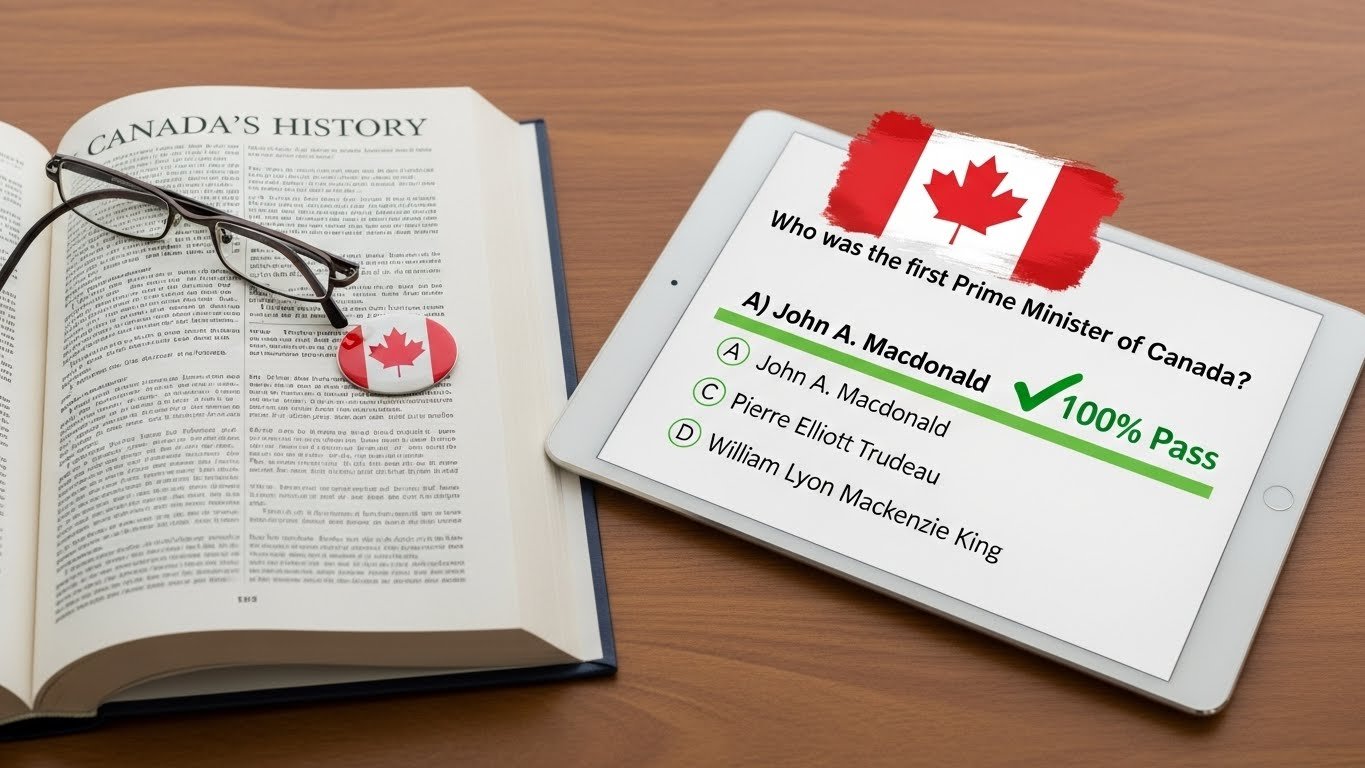
Important historical figures such as Sir John A. Macdonald are often included.
practice canadian citizenship test
Indigenous Peoples
The test includes questions about:
First Nations, Inuit, and Métis
Their traditional regions
Treaties and early relationships with Europeans
The impact of colonization
Ongoing reconciliation
Understanding Indigenous contributions is an important part of Canadian citizenship.
practice canadian citizenship test
Canadian Government and Democracy
Canada is a constitutional monarchy and a parliamentary democracy.
Key concepts include:
The role of the King as Head of State
The Governor General as the King’s representative
The Prime Minister as Head of Government
The House of Commons and Senate
Members of Parliament (MPs)
Applicants must understand how laws are made and how elections work.
practice canadian citizenship test
Federal, Provincial, and Municipal Responsibilities
The test checks knowledge of how powers are divided:
Federal government: defense, immigration, currency, foreign affairs
Municipal governments: local services such as roads and public transit
Knowing which level of government is responsible for what is very important for the test.
practice canadian citizenship test
The Canadian Charter of Rights and Freedoms
The Charter is part of the Constitution Act, 1982.
It guarantees:
Fundamental freedoms (religion, expression, assembly)
Democratic rights (voting)
Mobility rights
Legal rights
Equality rights
Language rights
The test often asks about basic Charter rights.
practice canadian citizenship test
Rights of Canadian Citizens
Canadian citizens have the right to:
Vote in elections
Run for public office
Apply for a Canadian passport
Enter and leave Canada freely
Receive protection under Canadian law
These rights are protected by the Constitution.
practice canadian citizenship test
Responsibilities of Canadian Citizens
Citizenship also involves responsibilities, including:
Obeying the law
Voting in elections
Serving on a jury when called
Paying taxes
Helping others and protecting the environment
Understanding responsibilities is just as important as knowing rights.
practice canadian citizenship test
Elections and Voting
Elections Canada runs federal elections.
Key points include:
Citizens must be 18 or older to vote
Canada uses a first-past-the-post system
The candidate with the most votes wins
Voting is a right and a civic duty
Applicants should understand how MPs are elected.
practice canadian citizenship test
Political Parties
The test may mention major political parties such as:
Liberal Party
Conservative Party
New Democratic Party (NDP)
Bloc Québécois
Green Party
Applicants are not tested on party leaders, only on general understanding.
practice canadian citizenship test
Justice System and Rule of Law
Canada follows the rule of law, meaning everyone is equal before the law.
Key principles include:
Presumption of innocence
Right to a fair trial
Independent courts
Supreme Court of Canada as the highest court
practice canadian citizenship test
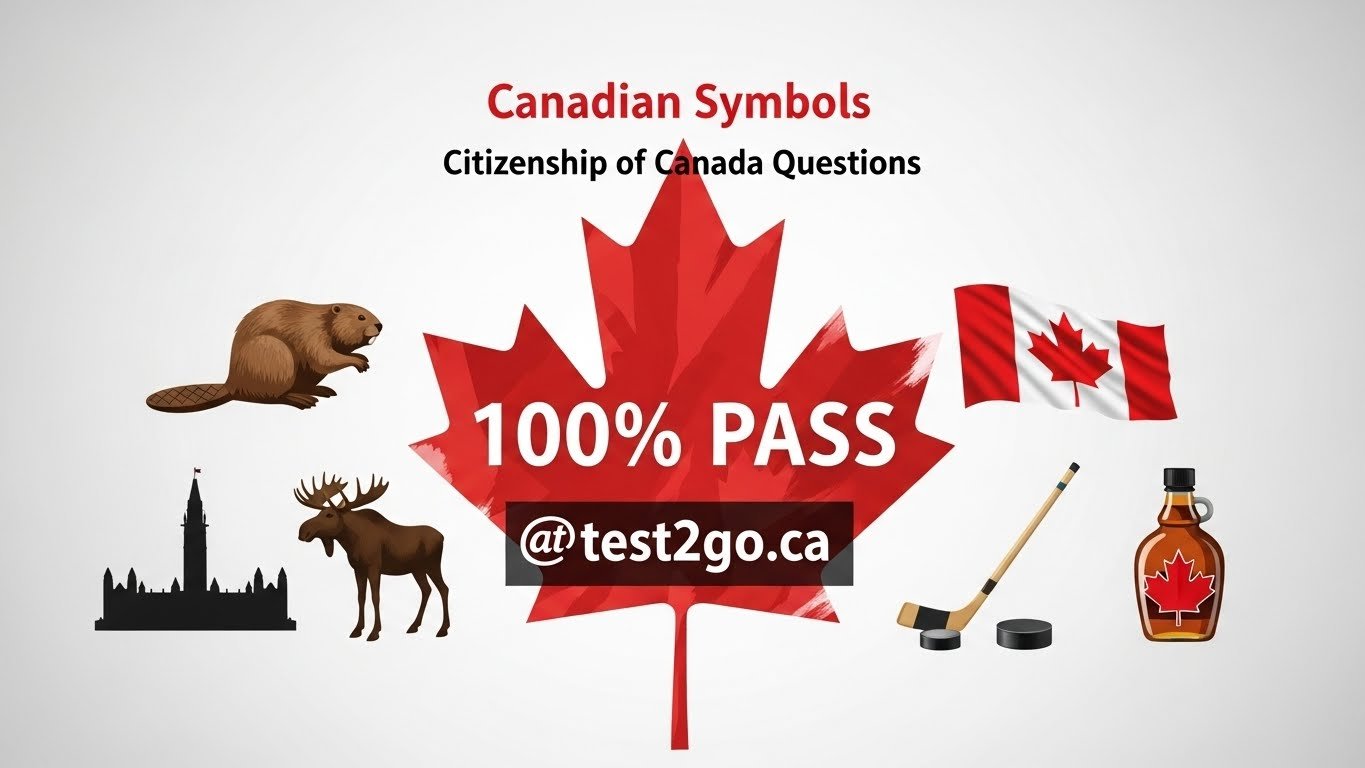
Canadian Symbols
Important symbols include:
The Canadian flag (red and white with a maple leaf)
The maple leaf
“O Canada,” the national anthem
The beaver
The Royal Canadian Mounted Police (RCMP)
These symbols represent Canadian history and identity.
practice canadian citizenship test
Official Languages
Canada has two official languages:
English
French
Federal services are available in both languages. New Brunswick is officially bilingual.
practice canadian citizenship test
Geography of Canada
Applicants must know:
Canada has 10 provinces and 3 territories
Capital city: Ottawa
Three oceans: Atlantic, Pacific, Arctic
Border with the United States
Major regions such as the Prairies and Arctic
practice canadian citizenship test
How to Prepare for the Test
Best ways to prepare include:
Reading Discover Canada carefully
Taking practice tests
Memorizing key facts and dates
Practicing English or French comprehension
Reviewing weak areas repeatedly
practice canadian citizenship test
What Happens After the Test
If you pass:
You may attend a citizenship ceremony
You take the Oath of Citizenship
You become a Canadian citizen
If you fail:
You may be invited to a retest or interview
1. Rights and Responsibilities of Citizenship
Canadian citizenship provides important rights protected by law, especially under the Canadian Charter of Rights and Freedoms. These rights ensure freedom, equality, and fairness for all citizens.
Key Rights of Canadian Citizens
Freedom of expression and speech
Freedom of religion and conscience
Freedom of peaceful assembly and association
Democratic rights, including the right to vote and run for public office
Mobility rights, allowing citizens to live and work anywhere in Canada
Legal rights, such as equality before the law
Responsibilities of Citizens
Obeying Canada’s laws
Voting in elections
Serving on a jury when summoned
Helping others and contributing to the community
Protecting the environment
Respecting the rights and freedoms of others
The citizenship test checks whether applicants understand both their freedoms and their duties as Canadians.
practice canadian citizenship test
2. Who We Are
Canada is a country built on diversity, respect, and shared values. Canadians come from many ethnic, cultural, and religious backgrounds, yet share a common commitment to democracy and human rights.
Key Characteristics of Canadian Identity
Indigenous Peoples: First Nations, Inuit, and Métis are the original peoples of the land
Official Languages: English and French
Multicultural Society: People are encouraged to preserve cultural traditions
Equality: Men and women have equal rights under the law
Canada values tolerance, cooperation, and peaceful coexistence. These principles form the foundation of Canadian society and are central to the citizenship test.
practice canadian citizenship test
3. Canada’s History
Understanding Canada’s past helps explain how the country developed its laws, borders, and institutions.
Early History
Indigenous peoples lived on the land for thousands of years
European exploration began in the late 1400s
France and Britain established colonies
British Rule and Confederation
Britain gained control of most of Canada after conflicts with France
Confederation occurred in 1867
The original provinces were Ontario, Quebec, Nova Scotia, and New Brunswick
20th Century Canada
Canada fought in World War I and World War II
Gained greater independence from Britain
Developed social programs such as healthcare
The test often includes questions on major historical events and leaders.
practice canadian citizenship test
4. Modern Canada
Modern Canada is an independent nation with a strong global presence and a high quality of life.
Key Features of Modern Canada
A democratic and peaceful society
Strong commitment to human rights
Public healthcare system
World-respected peacekeeping tradition
Leader in education, science, and technology
Canada today is known for safety, fairness, and opportunity. Understanding these modern characteristics is essential for the citizenship test.
practice canadian citizenship test
5. How Canadians Govern Themselves
Canada operates as a constitutional monarchy and a parliamentary democracy.
Main Elements of Government
The Monarch: Head of State, represented by the Governor General
The Prime Minister: Head of Government
Parliament: Makes federal laws
Three Levels of Government
Federal: National matters (defence, immigration)
Provincial/Territorial: Education, healthcare
Municipal: Local services
Test questions often focus on government roles and responsibilities at each level.
practice canadian citizenship test
6. Federal Elections
Federal elections allow citizens to choose their representatives democratically.
Key Election Facts
Citizens aged 18 or older can vote
Voting is secret and voluntary
Elections usually occur every four years
Members of Parliament (MPs) represent local ridings
Importance of Voting
Gives citizens a voice in government
Strengthens democracy
Is both a right and a responsibility
Understanding how elections work is a major test topic.
practice canadian citizenship test
7. The Justice System
Canada’s justice system is based on fairness, equality, and the rule of law.
Key Principles
Everyone is equal before the law
Innocent until proven guilty
Laws are written and enforced fairly
Components of the Justice System
Police: Enforce laws
Courts: Interpret laws
Judges: Ensure fair trials
The test checks awareness of legal rights and responsibilities in Canada.
8. Canadian Symbols
Canadian symbols represent the nation’s values, history, and identity.
Important Symbols
National flag (Maple Leaf)
National anthem (O Canada)
The beaver
The maple leaf
The Crown
Symbol-related questions are common and usually straightforward.
9. Canada’s Economy
Canada has a strong, stable, and diverse economy.
Economic Features
Mixed market economy
Major industries: natural resources, manufacturing, technology, services
Strong trade relationships, especially with the United States
Worker Rights
Fair wages
Safe working conditions
Equality in employment
The test emphasizes general understanding rather than detailed economics.
practice canadian citizenship test
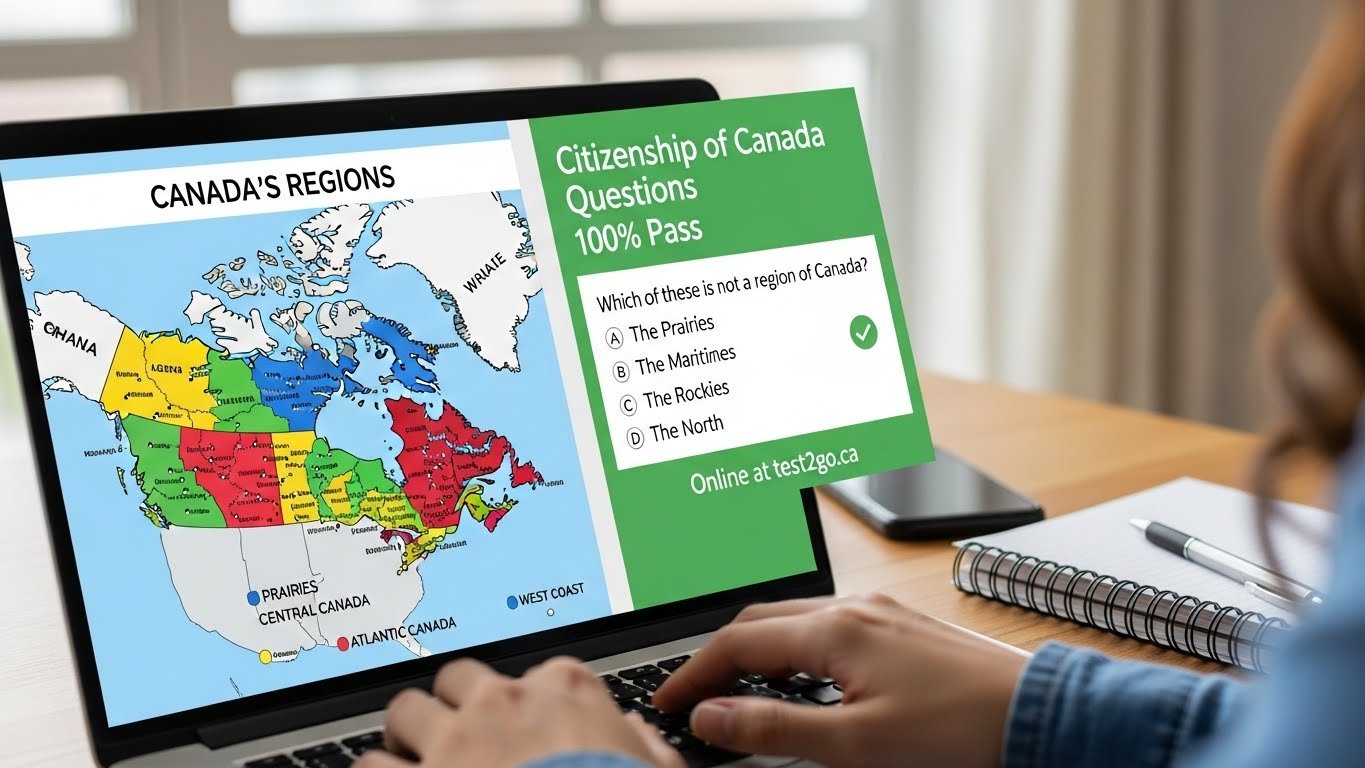
10. Canada’s Regions
Canada is divided into distinct regions, each with unique characteristics.
Major Regions
Atlantic Canada
Central Canada
Prairies
West Coast
Northern Territories
Provinces and Territories
10 provinces and 3 territories
Provinces have constitutional powers
Territories are governed federally and locally
Geography and regional knowledge appear frequently on the citizenship test.
✅ Final Note
These ten topics form the core of the Canada Citizenship Test. Studying them carefully will help applicants pass the test and better understand Canadian life, values, and institutions.