The Nunavut written driver’s test, also called the knowledge test, is the first official step toward getting a driver’s licence in Nunavut. Passing this test allows you to receive a Class 7 Learner’s Licence, which lets you begin practicing driving under specific conditions. The purpose of the written test is to make sure new drivers understand the basic rules of the road, traffic signs, and safe driving practices before they operate a vehicle.
The test is based entirely on the Nunavut Driver’s Manual, and all questions come from the information in that manual. If you study it carefully, you can pass the test confidently.
Nunavut drivers test practice
Purpose of the Written Test
Driving is a serious responsibility, especially in Nunavut where weather, road conditions, and visibility can be extreme. The written test ensures that new drivers:
Understand traffic laws and regulations
Can recognize and correctly interpret road signs and signals
Know how to drive safely and defensively
Are aware of Nunavut-specific conditions, such as winter driving and remote roads
Understand learner restrictions and basic licensing rules
The test is not meant to trick you. It is designed to confirm that you have the minimum knowledge needed to drive safely and legally.
Nunavut drivers test practice
Eligibility to Take the Test
To take the Nunavut written driver’s test, you must:
Be at least 15 years old
Provide acceptable identification (such as a birth certificate, passport, or government-issued ID)
Pass a vision test
If you are under 18, you must have parent or guardian consent
The test is taken in person at a Nunavut Motor Vehicles or licensing office. In some cases, oral testing or interpretation may be available if arranged in advance.
Nunavut drivers test practice
Test Format and Structure
The written test is multiple-choice and usually divided into two sections:
1. Rules of the Road and Safe Driving
2. Traffic Signs and Signals
Each section generally contains around 20 questions, though the exact number may vary. Each question has multiple answer choices, and only one answer is correct.
To pass, you must score at least 80% on each section. That usually means answering 16 out of 20 questions correctly per section. If you fail one section but pass the other, you typically only need to retake the section you failed.
Nunavut drivers test practice
Section 1: Rules of the Road and Safe Driving
This part of the test checks your understanding of how to drive safely and legally. Topics commonly include:
Traffic Laws
Speed limits in different areas
Obeying traffic signals and signs
Legal responsibilities of drivers
Consequences of breaking traffic laws
Right-of-Way Rules
Who goes first at intersections
Yielding to pedestrians
Right-of-way at stop signs and uncontrolled intersections
School bus rules
Safe Driving Practices
Following distance
Proper use of signals
Checking mirrors and blind spots
Defensive driving techniques
Winter and Extreme Conditions
Because Nunavut has long winters and harsh driving conditions, this topic is especially important. You may be tested on:
Driving on ice and snow
Reduced visibility
Adjusting speed for conditions
Emergency preparedness
Nunavut drivers test practice
Impaired and Distracted Driving
Alcohol and drug impairment
Fatigue
Using phones or other distractions
Legal penalties for impaired driving
Nunavut drivers test practice
Section 2: Traffic Signs and Signals
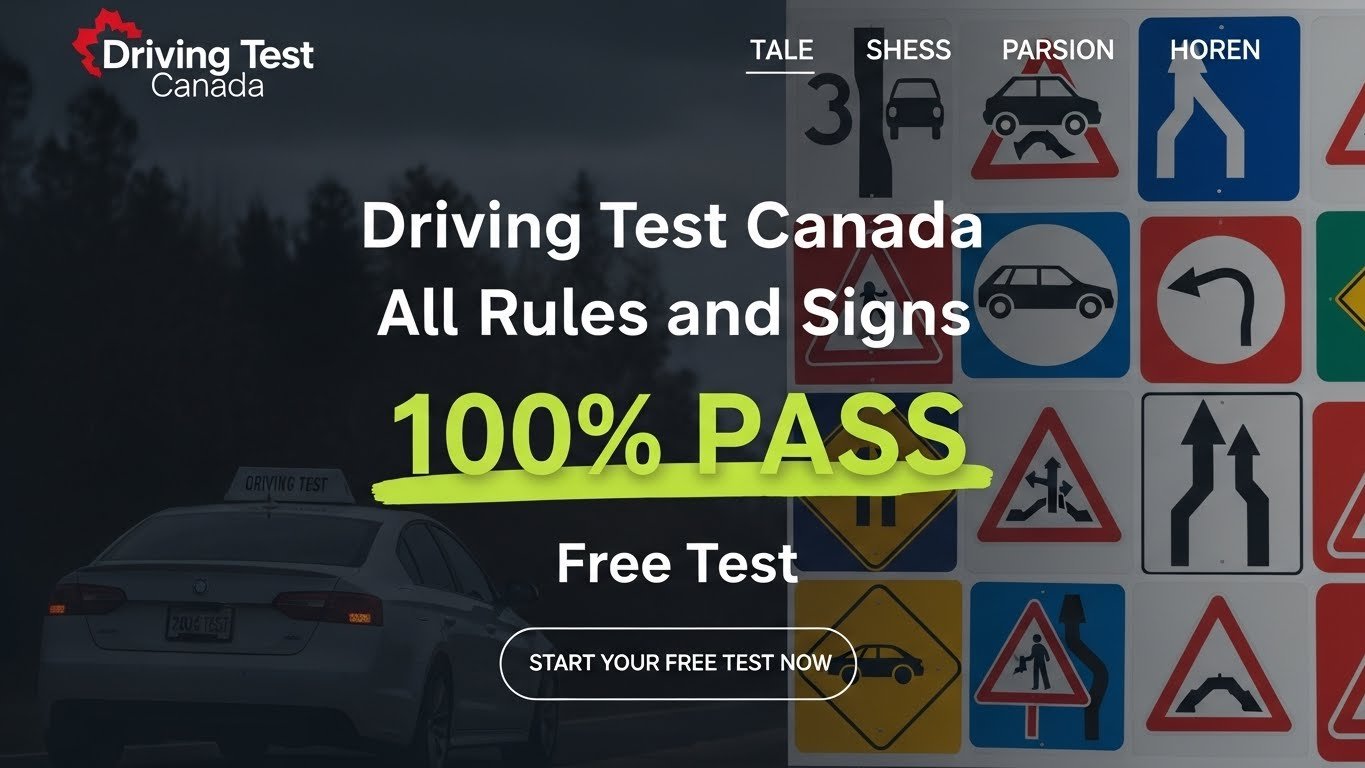
This section focuses on your ability to recognize and understand road signs. Many questions will show a picture of a sign and ask what it means.
You should know:
Regulatory Signs
These tell drivers what they must or must not do. Examples:
Stop
Yield
Speed limit
Do not enter
Nunavut drivers test practice
Warning Signs
These warn of potential hazards or changes in the road. Examples:
Sharp curves
Pedestrian crossings
Slippery roads
Narrow bridges
Nunavut drivers test practice
Information and Guide Signs
These provide directions or services. Examples:
Highway numbers
Distance markers
Service symbols (fuel, hospital, airport)
Sign shape and color are important. For example:
Octagon = Stop
Triangle = Yield
Diamond = Warning
Rectangle = Regulatory or information
Nunavut drivers test practice
Vision Test
Before or during your written test appointment, you will also take a vision screening. This checks that your eyesight meets the minimum standard for driving. If you require corrective lenses, this may be noted on your licence.
Nunavut drivers test practice
After You Pass the Written Test
Once you pass both sections of the written test and the vision test, you will be issued a Class 7 Learner’s Licence.
With a learner’s licence, you must follow restrictions, which usually include:
Driving only with a fully licensed driver
No alcohol in your system
Following all graduated licensing rules
Possibly restrictions on night driving or passengers
These rules are designed to help new drivers gain experience safely.
Nunavut drivers test practice
How to Study Effectively
1. Read the Nunavut Driver’s Manual
This is the most important step. Every test question comes from this manual. Read it carefully and more than once if possible.
2. Focus on Signs
Many people fail the sign section because they do not memorize sign meanings. Study sign shapes, colors, and symbols until they are familiar.
3. Practice Questions
Practice tests help you get used to the wording and style of questions. They also show which topics you need to review more.
4. Understand, Don’t Memorize
Instead of memorizing answers, understand why rules exist. This makes it easier to answer questions correctly even if they are worded differently.
5. Take Your Time
On test day, read every question carefully. Many wrong answers happen because of rushing or missing key words like “must,” “never,” or “except.”
Nunavut drivers test practice
Final Advice
The Nunavut written driver’s test is very manageable if you prepare properly. It is not about trick questions — it is about making sure you understand how to drive safely and responsibly in Nunavut’s unique conditions. Study the driver’s manual, pay special attention to traffic signs and winter driving, and take your time during the test.
New Brunswick Class 7 sign test New Brunswick Driving Signs – Description New Brunswick driving signs are used to communicate important information to drivers, ensuring…
Northwest Territories Driving sign test practice Northwest Territories Driving Signs – Practice & Meaning Guide (2026) Understanding Northwest Territories driving signs is essential for passing…