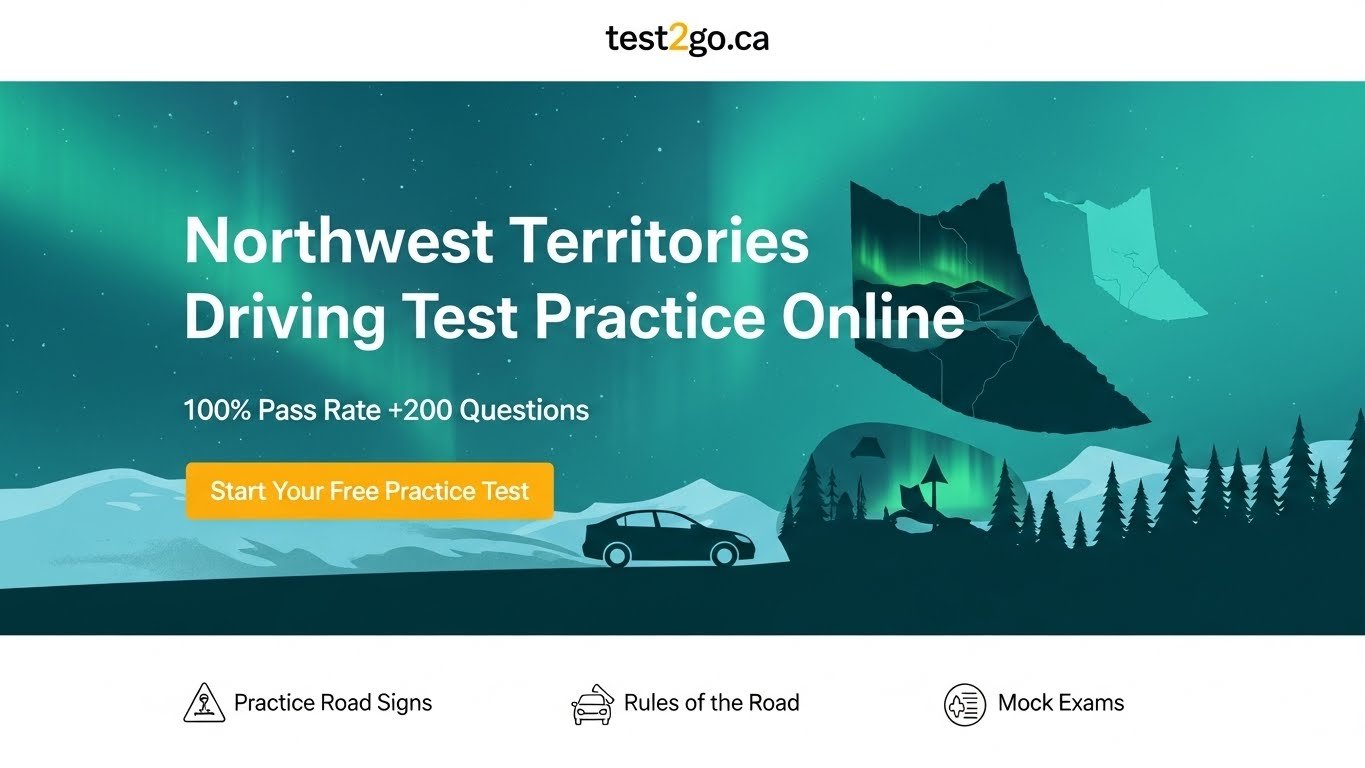
Driving in the Northwest Territories (NWT) requires careful preparation and understanding of the unique conditions of the region. With vast landscapes, long stretches of highway, remote communities, and harsh winter weather, drivers must be vigilant and skilled. Whether you are a new driver, transferring a license, or refreshing your knowledge, preparing for the Northwest Territories Driving Test is a crucial step to ensure safe and legal driving.
1. Overview of Driving in the Northwest Territories
The Northwest Territories is Canada’s second-largest territory, with a population spread across many remote and northern communities. Driving here is different from most provinces due to extreme seasonal changes, long rural roads, and limited roadside services in some areas.
Drivers face challenges such as icy roads, snowstorms, and low visibility during winter, while wildlife, including moose and caribou, can appear suddenly along highways. Summers can bring heavy rain and flooded roads in certain areas. Understanding these hazards is essential when preparing for the Northwest Territories Driving Test, as questions often address environmental awareness and safe driving practices in diverse conditions.
The driving environment also varies depending on whether you are in urban centers such as Yellowknife or in smaller communities like Hay River or Inuvik. Urban roads require attention to traffic signals, pedestrians, and cyclists, while rural and northern roads demand careful navigation of long stretches without services and the ability to respond to wildlife and environmental hazards.
2. Licensing System in the Northwest Territories
The Northwest Territories uses a Graduated Driver Licensing (GDL) system to ensure new drivers gain experience safely before receiving full driving privileges. Understanding the licensing process is critical when preparing for the Northwest Territories Driving Test.
Learner’s Permit (Class 7)
Minimum age: 16
Requirements: Pass the knowledge test and vision screening
Restrictions: Must be accompanied by a fully licensed driver, zero alcohol tolerance, no handheld device use
Probationary Licence (Class 5-P)
Granted after passing the road test
Restrictions include zero alcohol tolerance and maintaining a clean driving record
Full Licence (Class 5)
Full driving privileges with an alcohol limit of 0.08% BAC
No special restrictions for passengers or road use
Knowledge of these licensing stages is essential for success in the Northwest Territories Driving Test, as many questions assess understanding of restrictions, alcohol limits, and the responsibilities of new drivers.
3. Road Rules and Speed Limits
Road rules in the Northwest Territories follow Canadian traffic laws, with some territory-specific regulations that learners must know.
Speed Limits:
Urban areas: 50 km/h
Rural roads: 80 km/h
Highways: 100 km/h
School zones: 30–50 km/h (posted)
Seat Belts: Mandatory for all passengers; the driver is responsible for children.
Alcohol and Drugs: Zero tolerance for learners and probationary drivers.
Mobile Devices: No handheld use; hands-free systems are allowed.
The Northwest Territories Driving Test evaluates not only knowledge of speed limits but also understanding of proper lane usage, right-of-way rules, pedestrian safety, and signaling. Familiarity with these rules through study and practice ensures a higher chance of passing the written and road tests.
4. Preparing for the Knowledge Test
The knowledge test is a crucial component of the Northwest Territories Driving Test. It consists of multiple-choice questions assessing understanding of traffic laws, road signs, and safe driving practices.
To prepare effectively:
Study the official NWT Driver’s Handbook thoroughly, which contains detailed explanations of road rules, road signs, and driving scenarios.
Take online practice tests, which simulate the real exam and reinforce learning. The Northwest Territories Driving Test often tests knowledge of right-of-way, speed limits, pedestrian crossings, school zones, and seasonal hazards.
Review common road scenarios, including intersections, roundabouts, highway merging, and rural road navigation.
Using these strategies ensures that learners are well-prepared for the Northwest Territories Driving Test and can confidently answer questions related to both rules of the road and hazard perception.
5. Practical Road Test Preparation
The road test assesses the driver’s ability to safely operate a vehicle in real-world conditions. Practical skills evaluated during the Northwest Territories Driving Test include:
Vehicle control, including smooth acceleration, braking, and steering
Proper lane positioning and signaling
Observing traffic signs and signals
Checking mirrors and blind spots frequently
Responding to pedestrians, cyclists, and wildlife hazards
Because the Northwest Territories has long stretches of highway and rural roads, learners should practice driving in a variety of conditions, including:
Snow and ice during winter
Wet roads during summer rains
Low-visibility conditions such as fog or dusk
Understanding and practicing these skills is essential for passing the Northwest Territories Driving Test, as examiners focus on safe, responsible, and defensive driving. Consistent practice in diverse conditions prepares learners to handle real-world driving challenges confidently.
6. Tips, Common Mistakes, and Safety
Many candidates fail the Northwest Territories Driving Test due to preventable mistakes. Common errors include:
Rolling stops at stop signs or traffic lights
Failure to yield the right-of-way
Improper lane changes or unsafe passing
Not checking mirrors or blind spots
Driving too fast or too slow for conditions
To avoid these mistakes:
Maintain full attention on driving at all times
Adjust speed according to road and weather conditions
Keep a safe following distance
Use defensive driving techniques, anticipating other drivers’ mistakes
Practice frequently under the supervision of an experienced driver
Safety is particularly important in the Northwest Territories due to wildlife, harsh winters, and long rural stretches. Preparing with the Northwest Territories Driving Test materials ensures drivers understand these risks and can demonstrate proper handling during both the knowledge and road tests.
For added practice, many learners use online resources that simulate the Northwest Territories Driving Test, helping reinforce safe driving strategies and familiarize them with the exam format.
7. Conclusion
The Northwest Territories Driving Test is a critical step toward becoming a safe and responsible driver in one of Canada’s most challenging driving environments. By understanding the licensing system, road rules, speed limits, and practical skills required, learners can approach both the written and road tests with confidence.
Preparation is key. Studying the official handbook, practicing online through simulations of the Northwest Territories Driving Test, and gaining hands-on experience under supervision will maximize your chances of passing on the first attempt.
Drivers in the Northwest Territories face unique challenges, from long stretches of rural highway to sudden wildlife encounters and extreme weather conditions. Thorough preparation ensures not only success on the Northwest Territories Driving Test but also long-term safety and confidence on the roads.
By dedicating time to study, practice, and hands-on driving, learners can navigate the territory safely and responsibly, achieving full driving privileges and enjoying the independence that comes with being a skilled driver. The Northwest Territories Driving Test is more than an exam—it is a foundation for safe, lifelong driving habits in one of Canada’s most unique and beautiful regions.
Newfoundland and Labrador Driving rules Test Practice Click here Newfoundland and Labrador Driving Rules Test 1. Overview The NL Driving Rules Test is a written…