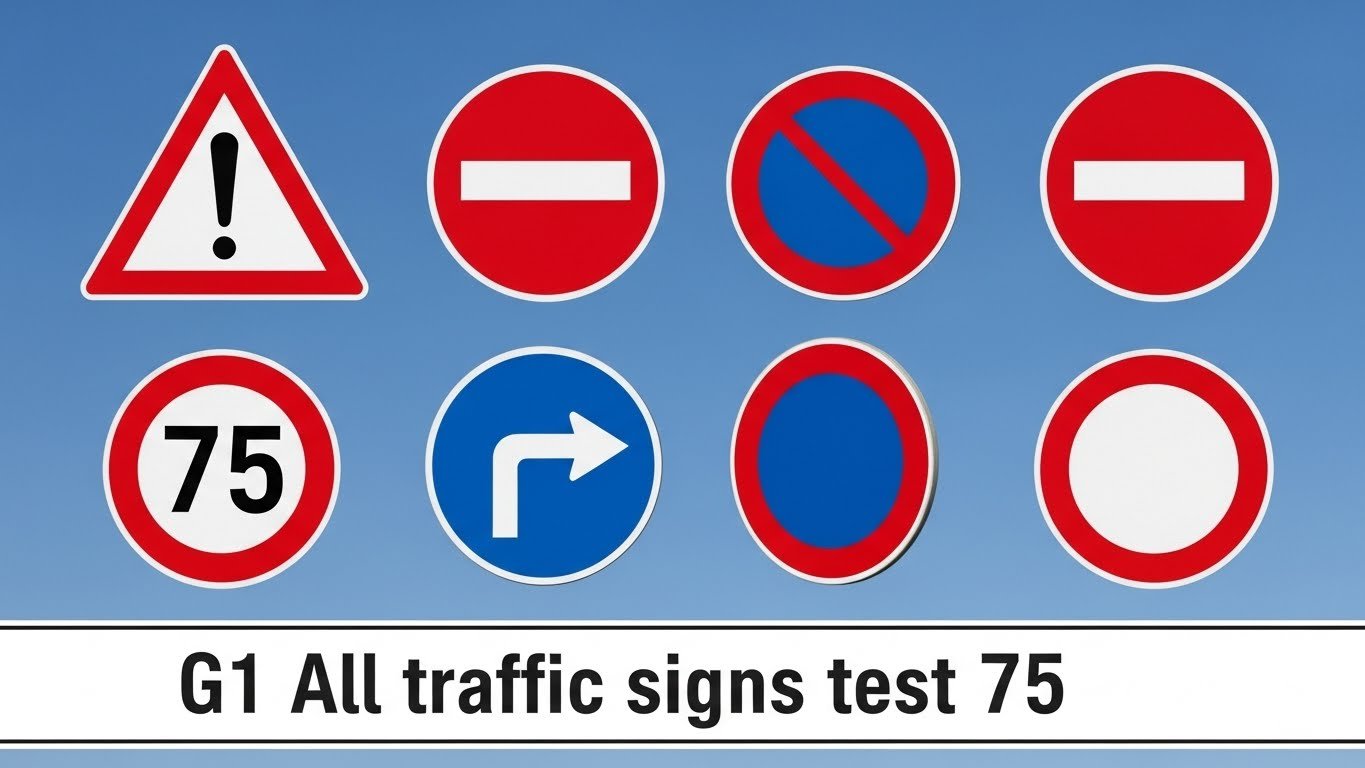
Manitoba traffic signs are designed to regulate traffic, warn drivers, and provide guidance. They use standard shapes and colors so drivers can quickly understand their meaning.
1. Regulatory Signs (Rules You Must Obey)
These signs tell drivers what they must or must not do. Ignoring them is a traffic offence.
Common features
Color: Red, white, black
Shape: Rectangle, octagon, triangle
Examples
Stop (Red Octagon): Come to a complete stop before proceeding.
Yield (Red & White Triangle): Slow down and give right-of-way to others.
Speed Limit (White Rectangle): Shows the maximum legal speed.
No Entry / Do Not Enter: Vehicles are not allowed.
No U-Turn / No Left Turn: Turning is prohibited.
2. Warning Signs (Hazards Ahead)
Warning signs alert drivers to potential dangers or changes in road conditions.
Common features
Color: Yellow with black symbols
Shape: Diamond
Examples
Curve Ahead: Road bends left or right.
Intersection Ahead: Watch for crossing traffic.
Slippery When Wet: Reduce speed in wet conditions.
Pedestrian Crossing: Watch for people crossing the road.
Railway Crossing Ahead (Round Yellow): Be prepared to stop.
3. School and Playground Signs
These signs protect children and pedestrians near schools and playgrounds.
Common features
Color: Yellow and black
Shape: Pentagon
Examples
School Zone: Reduced speed during posted hours.
School Crossing: Watch for crossing guards and children.
Playground Area: Slow down and be prepared to stop.
4. Construction Signs
Construction signs warn drivers of temporary road work and hazards.
Common features
Color: Orange with black symbols
Shape: Diamond or rectangle
Examples
Road Work Ahead: Construction zone ahead.
Lane Closed: Merge safely.
Detour: Follow alternate route.
Workers Present: Drive with extra caution.
5. Guide and Information Signs
These signs help drivers with directions, destinations, and services.
Common features
Color: Green, blue, or brown
Shape: Rectangle
Examples
Route Markers: Highway numbers and directions.
Exit Signs: Show upcoming exits.
Service Signs (Blue): Gas, food, hospital, rest area.
Tourist Signs (Brown): Parks and historic sites.
6. Railway Crossing Signs
These signs warn drivers about railway crossings and train tracks.
Examples
Crossbuck (White X): Railway crossing – yield to trains.
Flashing Red Lights: Stop at least 5 metres (15 ft) from nearest rail.
Gate Down: Do not cross.
7. Traffic Signals (Lights)
Traffic signals control vehicle and pedestrian movement.
Red Light: Stop.
Yellow (Amber) Light: Prepare to stop if safe.
Green Light: Go when safe.
Flashing Red: Stop, then proceed when safe.
Flashing Green (Manitoba): Advance green – left turns permitted.
8. Pavement Markings (Related to Signs)
Solid Yellow Line: No passing.
Broken Yellow Line: Passing allowed if safe.
White Lines: Separate traffic in the same direction.
Driving Test Centre Ontario Free driving test practice all questions Driving Test Centre Ontario Arnprior(Travel point from Renfrew)Royal Canadian Legion, 49 Daniel St NArnprior, K7S…