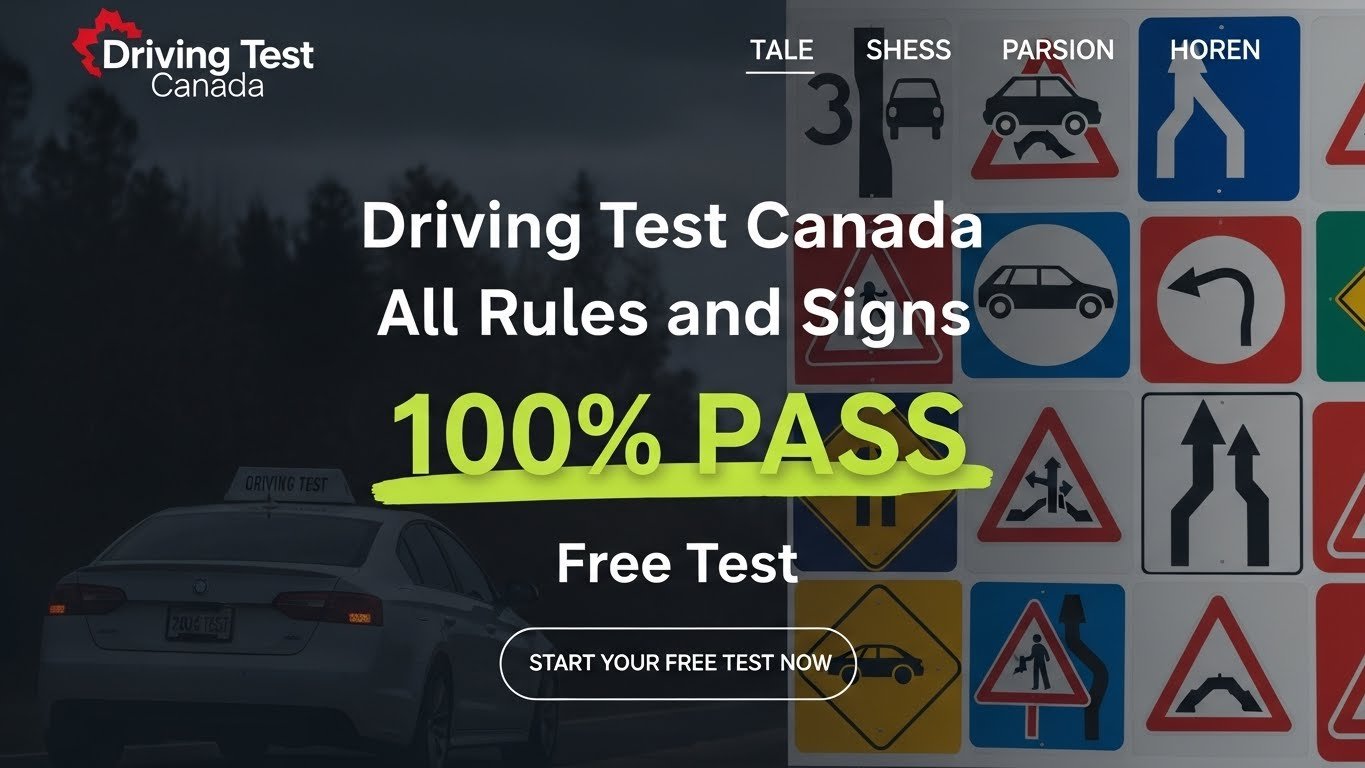
New Brunswick driving signs are designed to communicate rules, warnings, and helpful information to drivers. By recognizing and understanding these signs, drivers can navigate roads safely and pass the NB Class 7 Knowledge Exam with confidence. The signs are grouped into several key categories:
how to practice New Brunswick driving signs
1. Regulatory Signs
Regulatory signs show laws and mandatory requirements that must be followed at all times. Examples include:
Stop
Yield
Speed Limit
No U-Turn
Lane Control Disobeying these signs can lead to traffic violations or penalties under the New Brunswick Motor Vehicle Act.
how to practice New Brunswick driving signs
2. Warning Signs
Warning signs alert drivers to hazards, road conditions, or changes ahead. They are usually yellow and diamond-shaped. Common examples:
Curves and Turns
Pedestrian and School Crossings
Railway Crossings
Animal Crossings
Narrow or Merging Lanes These signs give drivers time to slow down, prepare, and react safely.
how to practice New Brunswick driving signs
3. Guide & Information Signs
Guide signs provide helpful navigation information such as directions, distances, and route numbers. Information signs may indicate services like gas, hospital, lodging, or rest areas. Examples:
Highway Route Markers
Destination Signs
Exit Signs
Service Information
how to practice New Brunswick driving signs
4. Construction & Temporary Signs
These orange signs warn of construction zones, lane closures, speed reductions, and temporary hazards. Examples include:
Road Work Ahead
Flag Person Ahead
Reduced Speed Construction Zone
how to practice New Brunswick driving signs
5. Traffic Signals & Pavement Markings
Traffic lights, arrows, lane markings, symbols, and painted lines help control traffic flow, lane use, and right-of-way.
Canada citizenship test history Canada’s History Canada’s history reflects thousands of years of Indigenous presence, centuries of European settlement and colonial rivalry, and the gradual…
Alberta Motorcycle Driving Test Click here Alberta Motorcycle Driving Test The Alberta motorcycle driving test evaluates a rider’s knowledge of traffic laws, motorcycle-specific rules, and…