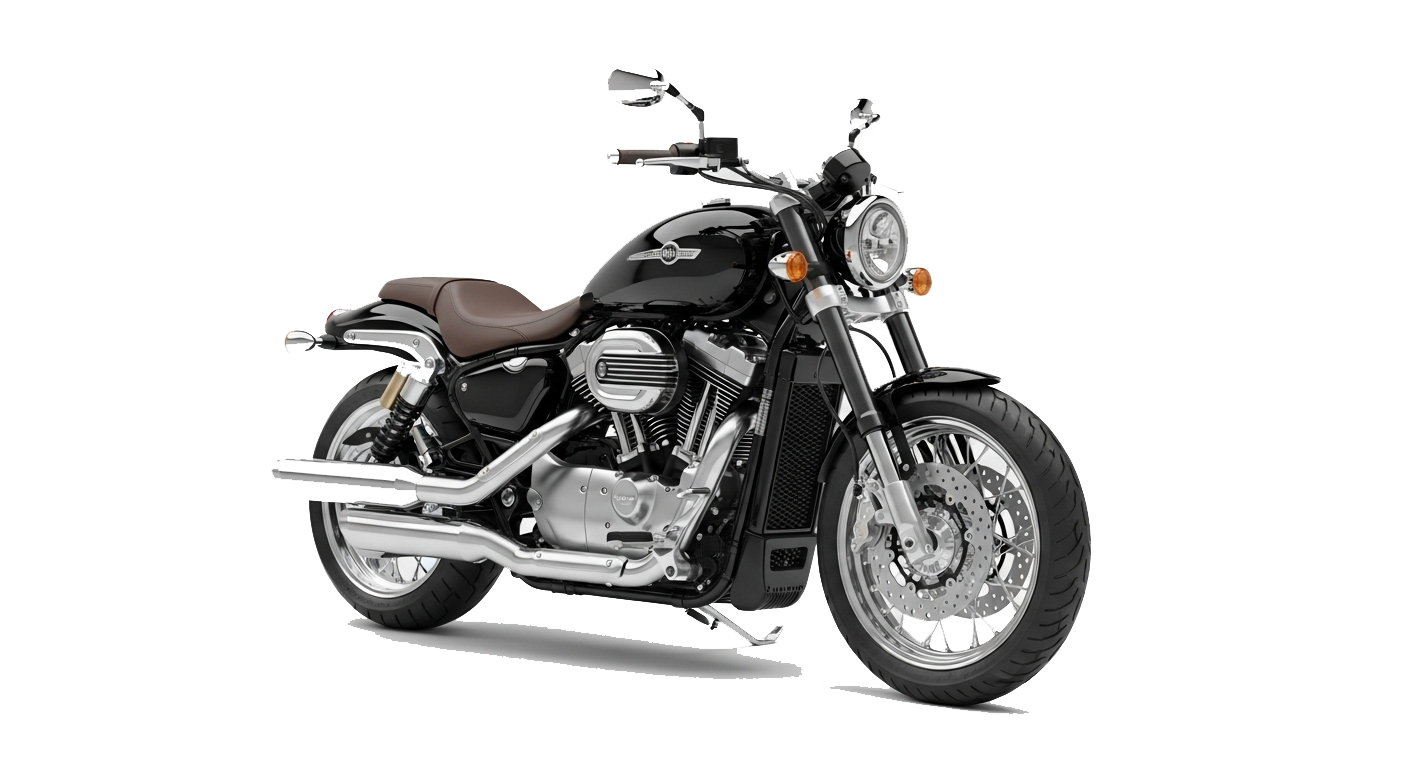
TheBC motorcycle rules test evaluates a rider’s understanding of traffic laws, safety practices, and motorcycle-specific operation. Motorcycles are smaller and less visible than cars, making knowledge and defensive riding critical for safety. The test ensures riders know the rules and can apply them safely on BC roads.
The BC motorcycle licensing program includes:
Knowledge Test – A written or computerized test on traffic laws, road signs, and motorcycle-specific rules.
Practical Road Test – Evaluates riding skills, control, and safe operation in real traffic.
British Columbia Motorcycle rules test practice
BC Motorcycle Licensing System
BC uses a Graduated Licensing Program (GLP) for motorcycle riders:
Learner’s Licence (L): Must pass the knowledge test and complete a basic motorcycle safety course. Learners must ride with an “L” decal and cannot carry passengers.
Novice Licence (N): After passing the Class 6 road test, riders can ride alone but must follow restrictions like zero alcohol tolerance.
Full Motorcycle Licence (Class 6): Achieved after completing the GLP stages and holding the Novice licence for the required period.
Completion of approved motorcycle courses is strongly recommended for new riders.
British Columbia Motorcycle rules test practice
Motorcycle-Specific Safety Rules
Motorcycles require extra precautions:
Wear protective gear: Helmet, gloves, jacket, pants, and boots.
Use lights: Headlights should be on at all times for visibility.
Maintain distance: Keep a safe following distance to allow reaction time.
Avoid blind spots: Other drivers may not see motorcycles easily.
Following these rules reduces the risk of injury and improves road safety.
British Columbia Motorcycle rules test practice
Speed and Traffic Laws
Motorcycle riders follow the same rules as other drivers:
Obey all posted speed limits.
Adjust speed for weather, traffic, and road conditions.
Reduce speed in school zones, construction areas, and pedestrian-heavy areas.
Drive cautiously on wet, icy, or gravel roads.
Motorcycles are less stable than cars, so speed management is critical.
British Columbia Motorcycle rules test practice
Intersections and Right-of-Way
Motorcycle riders must be cautious at intersections:
Yield to pedestrians at crosswalks.
Yield to vehicles already in the intersection.
Yield to traffic approaching from the right at uncontrolled intersections.
Watch carefully for turning vehicles—they may not see motorcycles.
Being defensive and alert prevents collisions.
British Columbia Motorcycle rules test practice
Lane Positioning
Riders must position themselves to maximize visibility and safety:
Ride in the center or left of your lane to be seen by other drivers.
Avoid riding at the lane edge where debris and water collect.
Maintain space for maneuvering in emergencies.
Proper lane positioning is often tested during the road exam.
British Columbia Motorcycle rules test practice
Signaling and Communication
Signals inform others of your intentions:
Signal in advance before turning or changing lanes.
Turn off signals after completing the maneuver.
Use hand signals if motorcycle lights fail.
Failing to signal is a common reason for test mistakes.
British Columbia Motorcycle rules test practice
Defensive Riding
Motorcycle riders should always ride defensively:
Assume other drivers may not see you.
Anticipate sudden stops, lane changes, or doors opening.
Avoid riding alongside large vehicles for extended periods.
Keep a buffer space around your motorcycle at all times.
Defensive riding reduces the likelihood of accidents.
British Columbia Motorcycle rules test practice
Braking and Stopping
Motorcycles require careful braking:
Apply both front and rear brakes simultaneously.
Avoid sudden braking to prevent skidding.
Adjust braking for wet, icy, or loose surfaces.
Smooth, controlled braking is evaluated in the road test.
British Columbia Motorcycle rules test practice
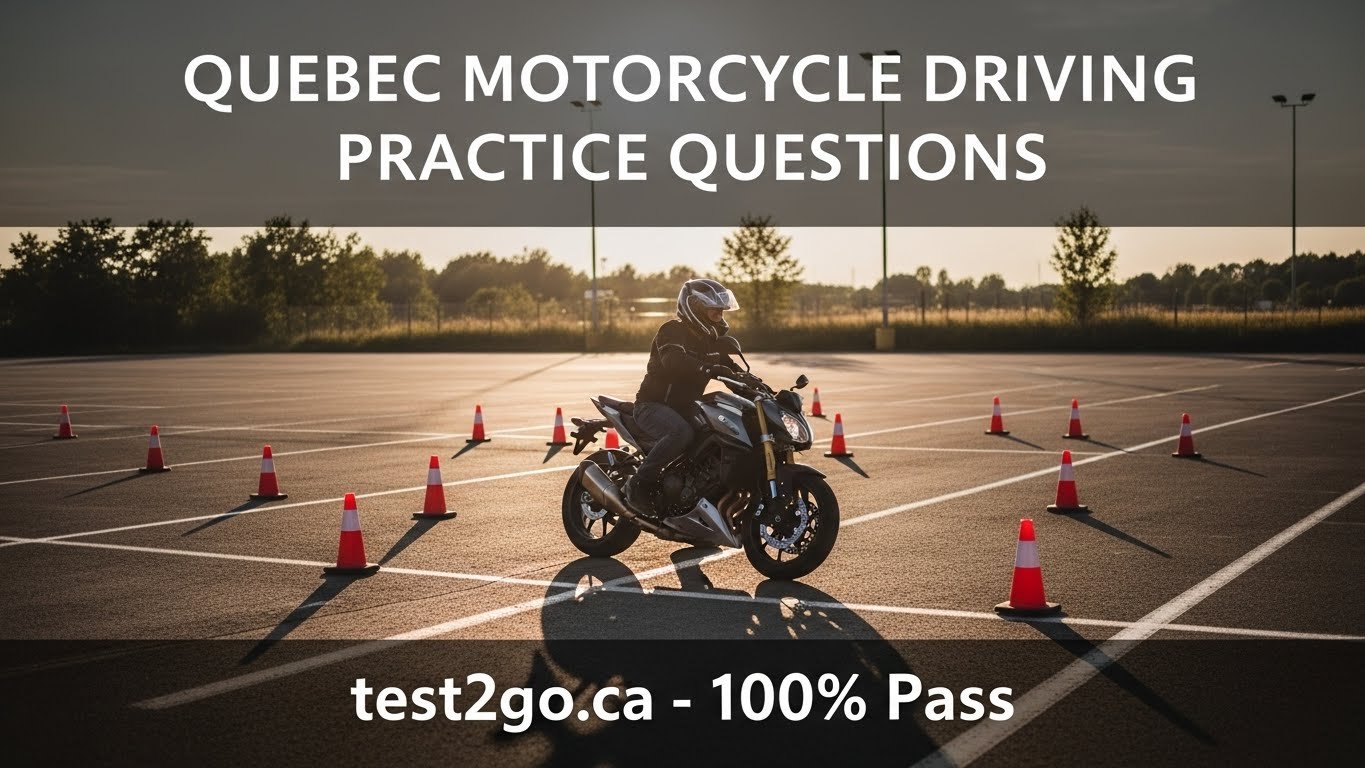
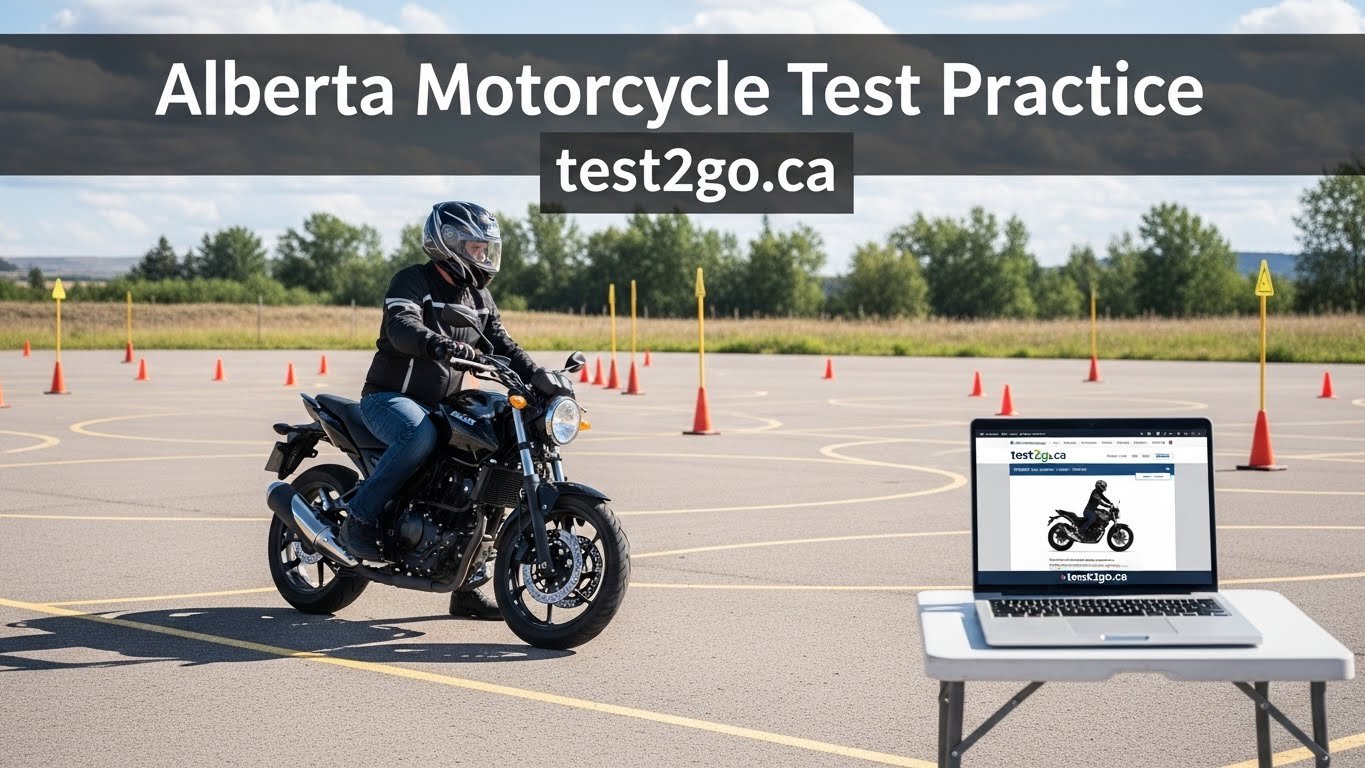
Motorcycle Maneuvers for Testing
BC road tests include:
Slow-speed control: Riding smoothly without putting feet down.
Emergency stops: Braking safely and efficiently.
Obstacle avoidance: Swerving or braking safely around hazards.
Turning and U-turns: Performing controlled turns within lane boundaries.
These maneuvers demonstrate rider control and skill.
British Columbia Motorcycle rules test practice
Night and Adverse Weather Riding
Riding in low visibility or bad weather requires precautions:
Wear reflective gear to increase visibility.
Reduce speed and increase following distance.
Avoid sudden braking or sharp turns.
Ensure headlights and signals are functional.
Questions on these conditions often appear on the knowledge test.
British Columbia Motorcycle rules test practice
Alcohol and Drug Laws
BC has strict rules for impaired driving:
Zero tolerance for learners and novice riders.
Driving under the influence of alcohol or drugs is illegal.
Even small amounts of alcohol can drastically impair motorcycle control.
Impaired riding is frequently tested in knowledge exams.
British Columbia Motorcycle rules test practice
Motorcycle Maintenance
Safe riding depends on a well-maintained motorcycle:
Check tires, brakes, lights, mirrors, and signals.
Ensure chain or belt is lubricated and tensioned properly.
Keep fuel and oil levels adequate.
Clear windows, mirrors, and lights from dirt or snow.
Examiners may ask questions about vehicle maintenance.
British Columbia Motorcycle rules test practice
Study Tips for BC Motorcycle Test
Review the ICBC Motorcycle Handbook thoroughly.
Memorize road signs, especially those affecting motorcycles.
Practice slow-speed maneuvers, emergency stops, and U-turns.
Always choose answers emphasizing safety and caution.
Consider taking a certified motorcycle safety course to improve skills.
British Columbia Motorcycle rules test practice
Summary
The BC motorcycle rules test emphasizes safety, control, and awareness. Riders must understand traffic laws, defensive riding, winter and adverse weather precautions, and motorcycle maintenance. Mastering these rules helps riders pass the knowledge and road tests and ensures safe operation on BC roads.
Newfoundland and Labrador Driving rules Test Practice Click here Newfoundland and Labrador Driving Rules Test 1. Overview The NL Driving Rules Test is a written…