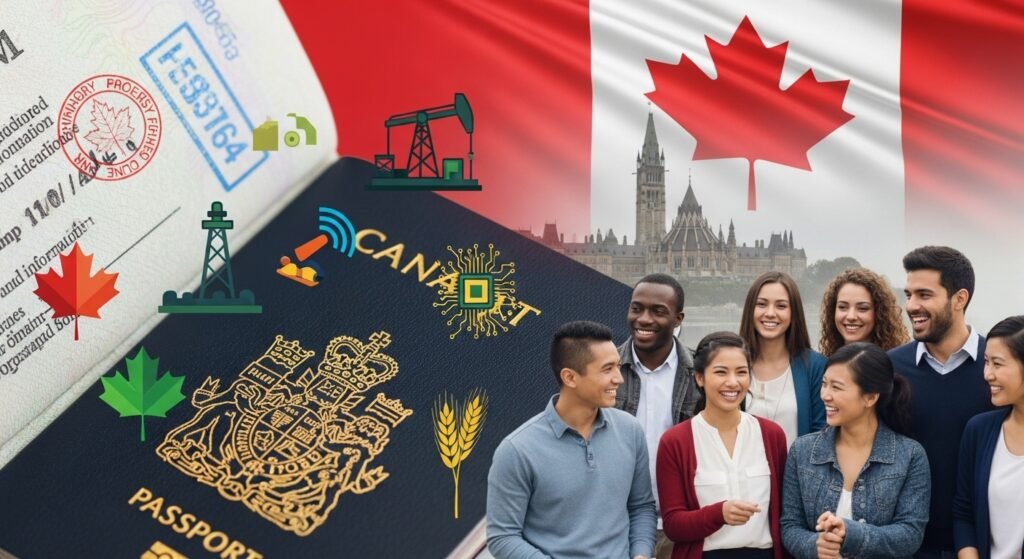
Canada has a diverse and advanced economy. It relies on natural resources, manufacturing, and services, and it is closely connected to global trade. Knowing about the economy is important for the Canadian citizenship test, as questions often cover industries, trade, and economic policies.
Canadian citizenship test economy
1. Key Economic Sectors
Primary Sector – Natural Resources
Includes forestry, mining, oil, fishing, and agriculture.
Canada is rich in resources like oil sands in Alberta, minerals in Quebec and Ontario, and timber in British Columbia.
Agriculture products include wheat, canola, dairy, and fruits.
Secondary Sector – Manufacturing & Industry
Canada produces vehicles, machinery, paper products, chemicals, and food products.
Manufacturing hubs are Ontario (cars) and Quebec (aerospace, technology).
Industry contributes significantly to exports and jobs.
Tertiary Sector – Services
Largest sector in the economy, employing most Canadians.
Includes banking, finance, healthcare, education, retail, tourism, and information technology.
The service sector drives economic growth and innovation.
Canadian citizenship test economy
2. International Trade
Canada is one of the world’s largest trading nations.
Main trading partners: United States, China, Mexico, and the European Union.
Top exports: Oil, cars, timber, machinery, wheat.
Top imports: Electronics, vehicles, machinery, consumer goods.
Canada is part of trade agreements like USMCA (United States-Mexico-Canada Agreement) to promote trade.
Canadian citizenship test economy
3. Currency & Banking
Currency: Canadian Dollar (CAD)
Bank of Canada controls money supply, sets interest rates, and maintains economic stability.
Canada has a stable banking system with strong, internationally respected financial institutions.
Alberta Traffic Sign Test Practice Fore more Questions 1. Regulatory Signs (Rules You Must Follow) These signs inform drivers of laws and regulations. Ignoring them…