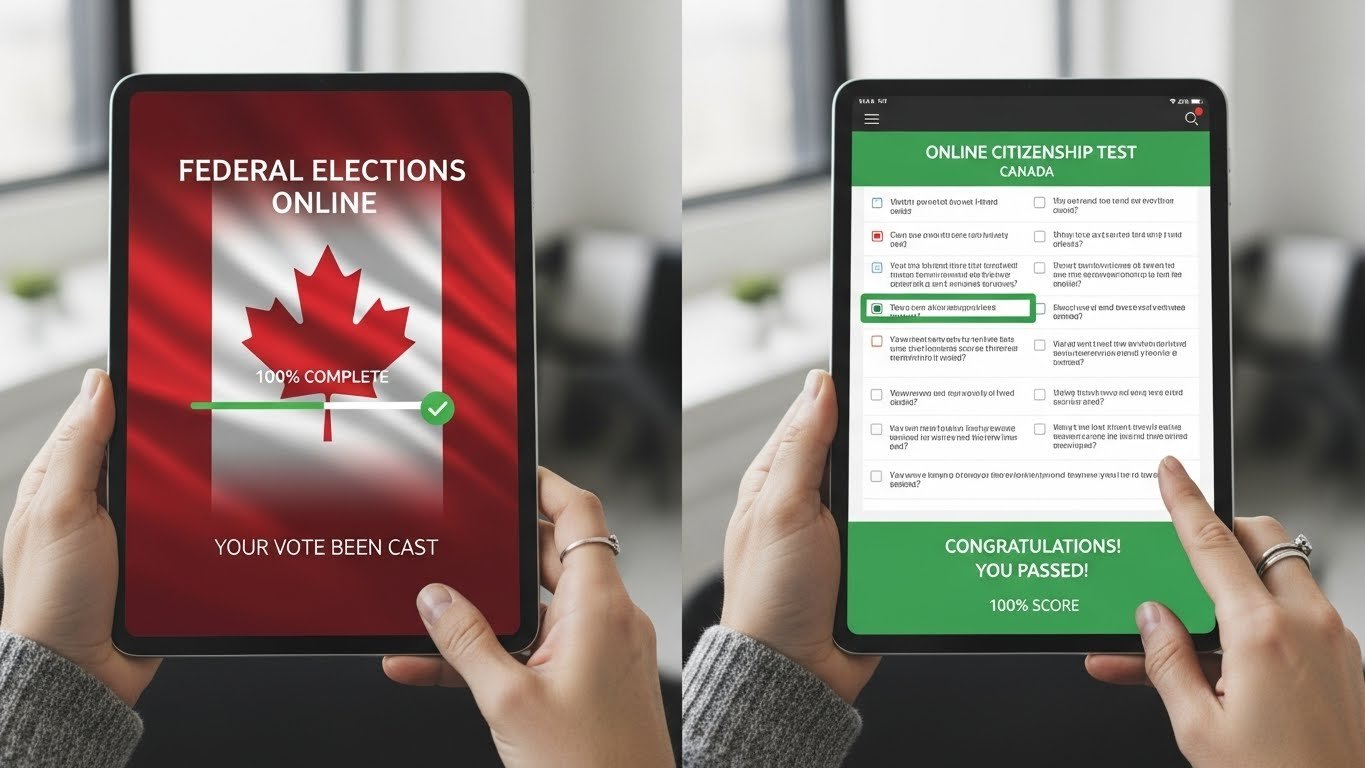
Federal elections are a fundamental part of Canadian democracy. They allow citizens to choose their representatives in Parliament, determine which political party forms the government, and select the Prime Minister. Understanding federal elections is essential for anyone preparing for the Canadian citizenship test.
Federal Elections Canada Citizenship Test
1. Purpose of Federal Elections
Federal elections decide:
Who will serve as Members of Parliament (MPs) in the House of Commons
Which political party forms the government
Who will lead the country as Prime Minister
Why it matters: Elections ensure that Canadians have a voice in national decision-making.
Federal Elections Canada Citizenship Test
2. Who Can Vote
To participate in federal elections, a person must: ✔ Be a Canadian citizen ✔ Be at least 18 years old on election day ✔ Be registered to vote
Voting is both a right and a responsibility of Canadian citizens.
Federal Elections Canada Citizenship Test
3. Electoral Districts (Ridings)
Canada is divided into electoral districts, also called ridings:
Each riding elects one MP
The candidate with the most votes wins in that riding (first-past-the-post system)
Example: If Candidate A gets 40% of the votes and Candidate B gets 35%, Candidate A becomes the MP for that riding.
Federal Elections Canada Citizenship Test
4. Political Parties
Political parties are groups of people with shared policies and goals.
Each party presents a leader and candidates in ridings across Canada
Parties have a platform, outlining their policies and plans
Canadians can vote for a candidate, regardless of party affiliation
Major parties include: Liberal Party, Conservative Party, New Democratic Party, Bloc Québécois, and Green Party.
Federal Elections Canada Citizenship Test
5. Forming the Government
The party with the most elected MPs usually forms the government
Its leader becomes the Prime Minister
Majority government: party wins more than half the seats
Minority government: party wins fewer than half; must seek support from other parties to pass laws
Purpose: Ensures Parliament reflects the will of Canadians.
Federal Elections Canada Citizenship Test
6. The Role of Parliament
Federal elections determine the composition of the House of Commons.
MPs debate, propose, and vote on laws
The Senate is not elected; senators are appointed and serve until age 75
Citizenship test tip: Know that House of Commons = elected, Senate = appointed.
Federal Elections Canada Citizenship Test
7. Election Cycle
Federal elections are held:
Every four years (fixed-date elections), or
Earlier if Parliament is dissolved
Dissolution: The Governor General, on the advice of the Prime Minister, can dissolve Parliament and call an election.
Federal Elections Canada Citizenship Test
8. Election Campaigns
During election campaigns:
Parties share their platforms
Leaders debate policies and issues
Candidates meet voters and explain their goals
Media reports and public discussions highlight election issues
Voting methods:
In-person at polling stations
Mail-in ballots (advance voting)
Federal Elections Canada Citizenship Test
9. After the Election
Once votes are counted:
MPs take their seats in Parliament
A new government is formed
The Prime Minister selects a cabinet to manage departments and implement policies
The Canada Citizenship Yes/No questions are part of the Canadian citizenship test and are designed to check your basic understanding of Canada. In these questions,…
Canada government citizenship test Click here The Justice System – Canada Citizenship Test Guide Canada’s justice system ensures that laws are upheld, rights are protected,…