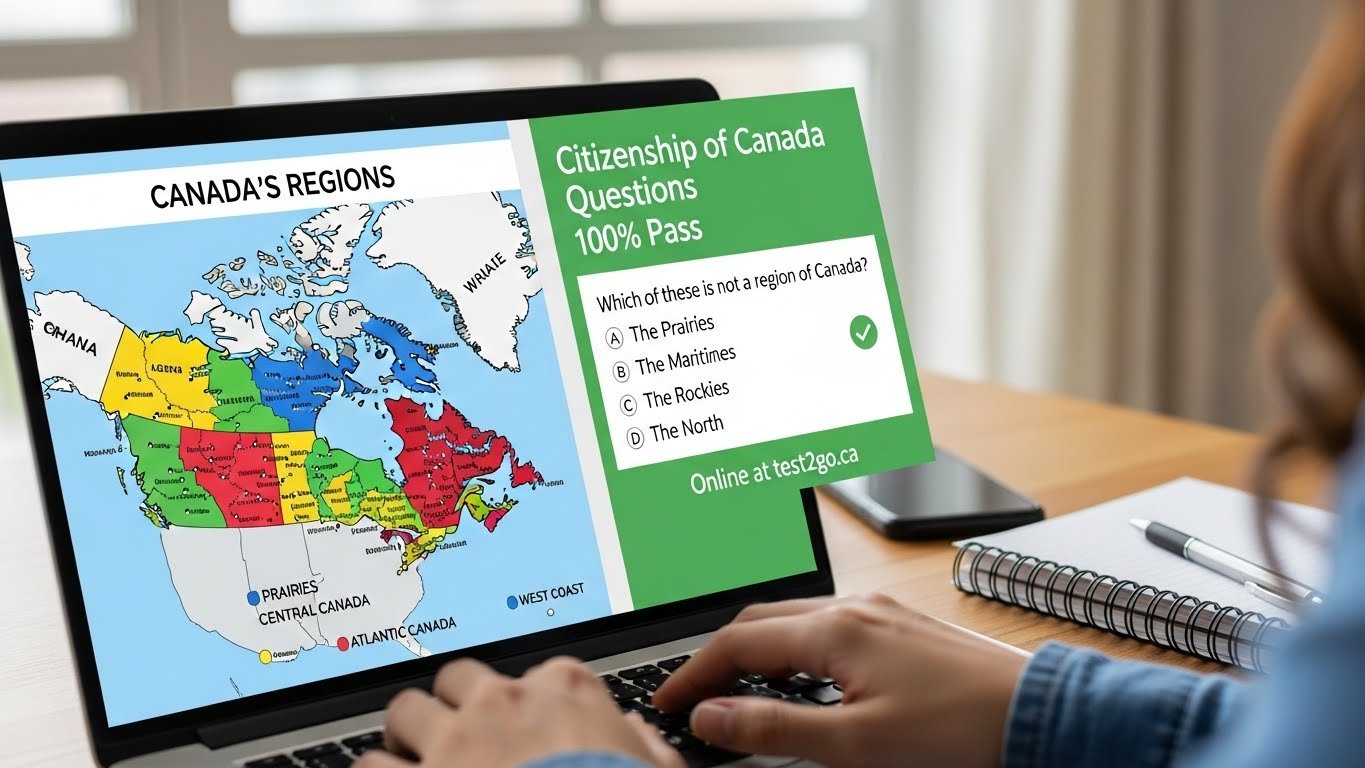
The Modern Canada Citizenship Test is an essential requirement for becoming a Canadian citizen. It assesses how well applicants understand Canada’s democratic system, cultural identity, history, laws, rights, responsibilities, and social values. The test reflects today’s Canada: a diverse, multilingual, and multicultural nation built on the principles of freedom, equality, and the rule of law.
Purpose of the Citizenship Test
The main purpose of the test is to ensure new citizens can:
Participate in civic life
Understand democratic institutions
Respect Canadian values
Engage in elections and decision-making
Appreciate Canada’s history and diversity
Citizenship is more than legal status — it represents belonging, contribution, shared values, and national identity.
Test Structure and Format (Modern Requirements)
Category
Details
Number of questions
20
Format
Multiple-choice + True/False
Duration
30 minutes
Passing score
75% (15/20)
Language
English or French
Location
In person at IRCC
Age requirement
18 to 54 years old
Applicants aged 55+ do not need to take the test.
Core Knowledge Areas
Modern test questions come from the official Discover Canada guide and include:
1. Rights and Responsibilities
Charter of Rights and Freedoms
Voting rights
Legal rights & mobility rights
Responsibilities: obey laws, defend Canada, serve on jury, vote
2. Democracy and Government
Parliamentary system
Role of the Governor General
Prime Minister & Cabinet
MPs, Senators
Elections & political parties
Rule of law & democratic values
3. Canadian History
Indigenous civilizations
French & British heritage
Confederation (1867)
WWI, WWII, Cold War
Modern milestones (Charter 1982, multiculturalism 1971)
Residential schools & reconciliation
4. Geography and Regions
Provinces & territories
Capitals & major cities
Natural resources & climate
Coastlines, mountains & prairies
5. Symbols and Identity
Maple Leaf
National anthem
Coat of Arms
Wildlife & cultural symbols
National holidays
6. Diversity and Multiculturalism
Cultural inclusion
Official bilingualism
Immigration contributions
Modern values and social harmony
7. Indigenous Peoples & Reconciliation
Contemporary versions of the citizenship test place stronger emphasis on:
First Nations, Inuit & Métis
Treaties & territorial rights
Truth and Reconciliation
Indigenous cultures, languages & modern political participation
This reflects Canada’s ongoing commitment to reconciliation and recognition.
8. Economy & Modern Society
Natural resource economy
Technology & innovation
Education systems
Healthcare system
Workforce and industries
Modern Themes Emphasized
Compared to older versions, the modern test highlights:
✔ Inclusion & Diversity ✔ Reconciliation ✔ Contemporary politics ✔ Charter protections ✔ Rights based citizenship ✔ Social responsibility
The test aims to ensure citizens contribute to a cohesive, democratic, and multicultural society.
Study Materials & Resources
The official IRCC resources include:
Discover Canada: The Rights and Responsibilities of Citizenship
Government practice questions
Online sample tests
Local community centers
Settlement agencies
Citizenship preparation classes
The Oath of Citizenship
After passing the test and interview, applicants take the Oath of Citizenship, pledging loyalty to Canada and commitment to democratic principles.
Why the Modern Test Matters
Becoming a citizen allows individuals to:
Vote in federal, provincial, and municipal elections
Online Manitoba driving test practice PDF Manitoba Driving Rules – Overview Manitoba drivers must follow traffic laws established by Manitoba Public Insurance (MPI) and the…