Citizenship is a foundational concept in modern societies, defining the relationship between individuals and the state. It establishes a framework of rights that protect citizens and responsibilities that ensure the smooth functioning of society. While rights grant freedoms and protections, responsibilities require active participation and respect for the law. Together, they form the basis of a stable, democratic, and just society.
The Rights and Responsibilities of Citizenship
Rights of Citizenship
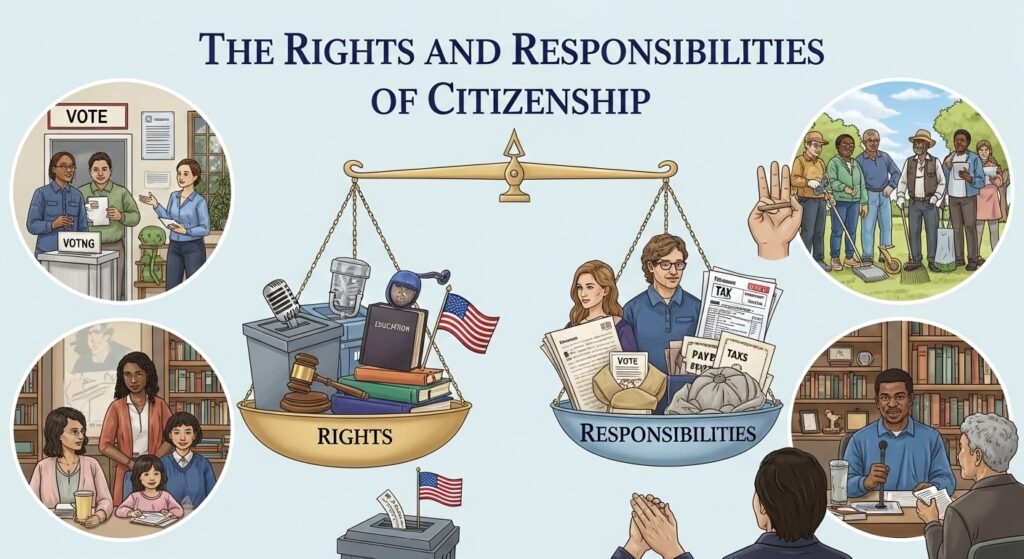
Rights are protections and freedoms granted to citizens, usually guaranteed by a constitution or law. Common examples include:
Civil rights – freedom of speech, religion, press, and assembly
Political rights – the right to vote, run for office, and participate in government
Legal rights – equal protection under the law and the right to a fair trial
Social and economic rights (in some countries) – access to education, healthcare, and social services
These rights protect individuals from abuse of power and allow citizens to express themselves, influence government, and live with dignity.
The Rights and Responsibilities of Citizenship
Responsibilities of Citizenship
While rights protect citizens, responsibilities require them to act in ways that support the common good. Responsibilities are essential for maintaining social order and ensuring that the rights of all individuals are respected.
One fundamental responsibility is obeying the law. Laws are created to protect citizens, maintain order, and promote fairness. Respecting the law helps prevent chaos and ensures that society functions effectively.
Another key responsibility is paying taxes. Taxes fund public services such as education, healthcare, infrastructure, public safety, and social welfare programs. By paying taxes, citizens contribute to the collective resources that benefit society as a whole.
Civic participation is also a vital responsibility. This includes voting in elections, staying informed about public issues, serving on juries, and engaging in community activities. Active participation strengthens democracy by ensuring that government reflects the will and interests of the people.
Citizens are also responsible for respecting the rights and freedoms of others. Freedom of speech, for example, does not justify hate speech or violence. Responsible citizenship requires tolerance, respect, and cooperation among people of different backgrounds, beliefs, and opinions.
In some countries, citizens may also have responsibilities related to national service or defense, such as military service or civil service during emergencies. These duties emphasize loyalty and commitment to the nation.
The Rights and Responsibilities of Citizenship
The Balance Between Rights and Responsibilities
A healthy society depends on balance. Rights without responsibilities can lead to disorder, while responsibilities without rights can lead to oppression. Active, informed citizens who understand both are essential to maintaining democracy and social stability.
The Rights and Responsibilities of Citizenship
Conclusion
Citizenship is not passive. It requires engagement, respect for the law, and concern for the common good. By exercising their rights responsibly and fulfilling their duties, citizens help build a just and sustainable society.
Saskatchewan written test rules Click here Saskatchewan Driving Rules – Complete Guide Saskatchewan driving rules are established by SGI and the Traffic Safety Act. All…
Nunavut Driver’s Test – Description The Nunavut driver’s test is designed to make sure new drivers understand road rules, traffic signs, and safe driving practices,…