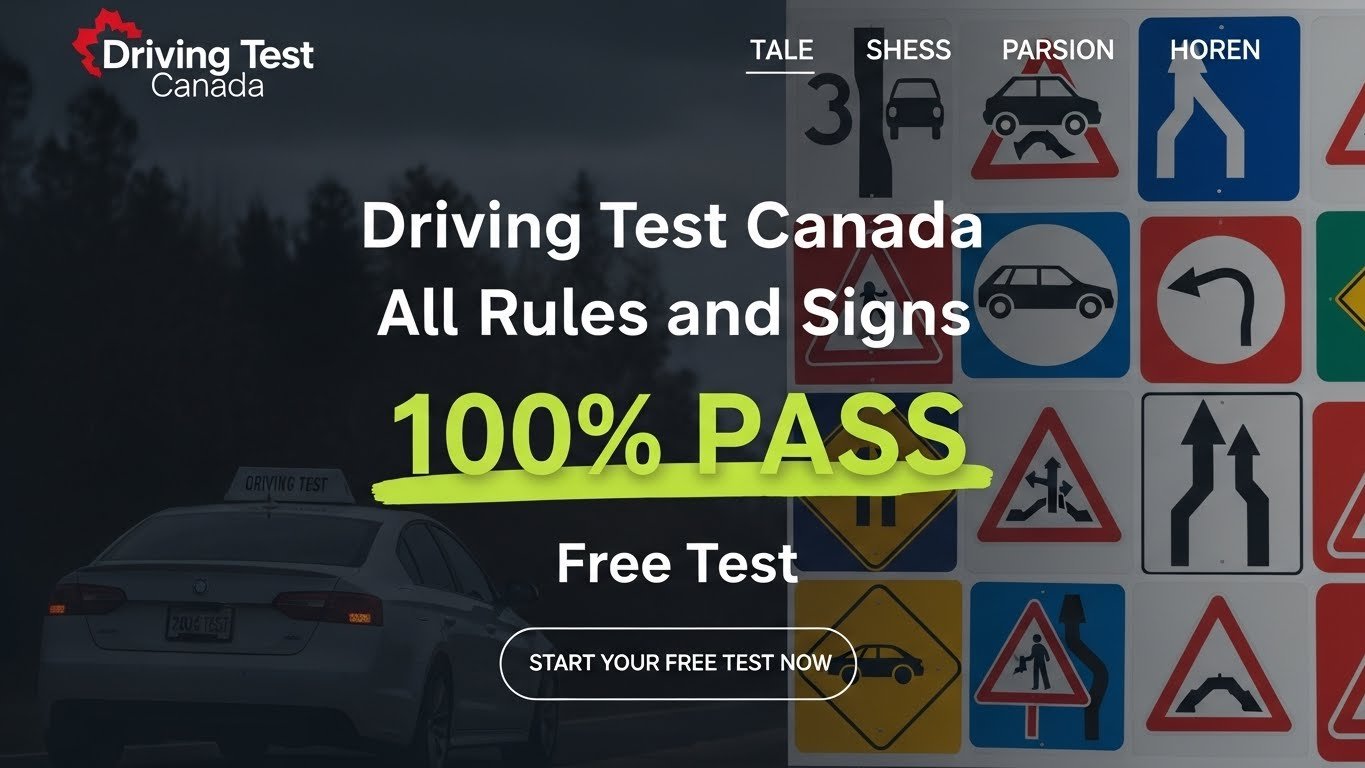
Road signs are a major part of the Yukon driving written test. Drivers must recognize signs quickly and understand what actions they require. Yukon uses standard Canadian road signs, but northern conditions such as wildlife crossings, winter hazards, and rural highways make sign awareness especially important.
This practice guide explains the main categories of road signs, their shapes, colors, and meanings.
Regulatory Signs
Regulatory signs tell drivers what they must do or must not do. These signs are enforced by law.
Common characteristics:
Usually red, white, or black
Often rectangular or octagonal
Must be obeyed at all times
Examples include stop signs, speed limit signs, and no-turn signs.
Stop Sign
The stop sign is red and octagonal.
Drivers must:
Come to a complete stop
Stop before the stop line or crosswalk
Yield to pedestrians and traffic
Rolling stops are illegal and cause test failure.
Yield Sign
The yield sign is red and white and shaped like an upside-down triangle.
Drivers must:
Slow down
Stop if necessary
Give the right-of-way to other vehicles or pedestrians
You may proceed only when it is safe.
Speed Limit Sign
Speed limit signs are rectangular with black text on a white background.
Drivers must:
Not exceed the posted speed
Reduce speed in poor weather or road conditions
Obey lower limits in school and construction zones
Speed limits apply unless another sign indicates otherwise.
Do Not Enter Sign
This sign is red and white with a horizontal white bar.
Drivers must:
Not enter the roadway
Look for an alternate route
Entering against this sign is dangerous and illegal.
Warning Signs
Warning signs alert drivers to potential hazards ahead.
Common characteristics:
Yellow background with black symbols
Diamond-shaped
These signs require drivers to slow down and prepare to react.
Curve and Turn Warning Signs
These signs show upcoming curves or sharp turns.
Drivers should:
Reduce speed
Stay in their lane
Avoid sudden braking
Curves can be especially dangerous in winter.
Wildlife Crossing Signs
Wildlife signs are very common in Yukon.
They warn drivers about:
Moose
Caribou
Other large animals
Drivers must:
Slow down
Watch road edges
Be ready to stop suddenly
Collisions with wildlife can be fatal.
Slippery When Wet or Icy Signs
These signs warn of reduced traction.
Drivers should:
Reduce speed
Increase following distance
Avoid sharp steering or braking
These signs are especially important during winter months.
Construction Signs
Construction signs warn drivers of road work zones.
Common features:
Orange background
Black symbols or text
Drivers must:
Slow down
Follow posted instructions
Watch for workers and equipment
Fines are often higher in construction zones.
School and Playground Signs
These signs warn drivers that children may be present.
Drivers must:
Reduce speed during posted times
Watch carefully for children
Be prepared to stop
These areas are strictly enforced.
Guide and Information Signs
Guide signs provide directions and useful information.
Common features:
Green or blue background
White symbols or text
These signs help drivers navigate safely.
Route and Direction Signs
These signs indicate:
Highway numbers
Directions to towns and services
Distance information
They help drivers plan ahead, especially on long Yukon highways.
Service Signs
Service signs show available services such as:
Fuel
Food
Hospitals
Rest areas
They are especially important in remote areas where services are limited.
Railway Crossing Signs
Railway signs warn drivers of train crossings.
Drivers must:
Slow down
Look both ways
Stop when lights flash or gates are down
Never attempt to cross when a train is approaching.
Temporary and Special Condition Signs
These signs provide warnings for unusual or temporary conditions.
Examples include:
Detours
Road closures
Emergency conditions
Drivers must follow instructions carefully.
Shape Recognition on the Yukon Test
Recognizing sign shapes is essential.
Octagon: Stop
Triangle: Yield
Diamond: Warning
Rectangle: Regulatory or information
Circle: Railway crossing
Shape recognition helps even if signs are covered by snow.
Test Preparation Tips for Road Signs
To succeed on the Yukon written test:
Memorize sign shapes and colors
Practice with sample sign questions
Read each question carefully
Choose the safest answer
Road sign questions are among the easiest points to earn if studied properly.
Conclusion
Understanding road signs is essential for safe driving in Yukon’s challenging conditions. The Yukon driving test places strong emphasis on sign recognition, meaning, and proper driver response. By learning regulatory, warning, construction, and information signs, drivers can improve safety and increase their chances of passing the test on the first attempt.