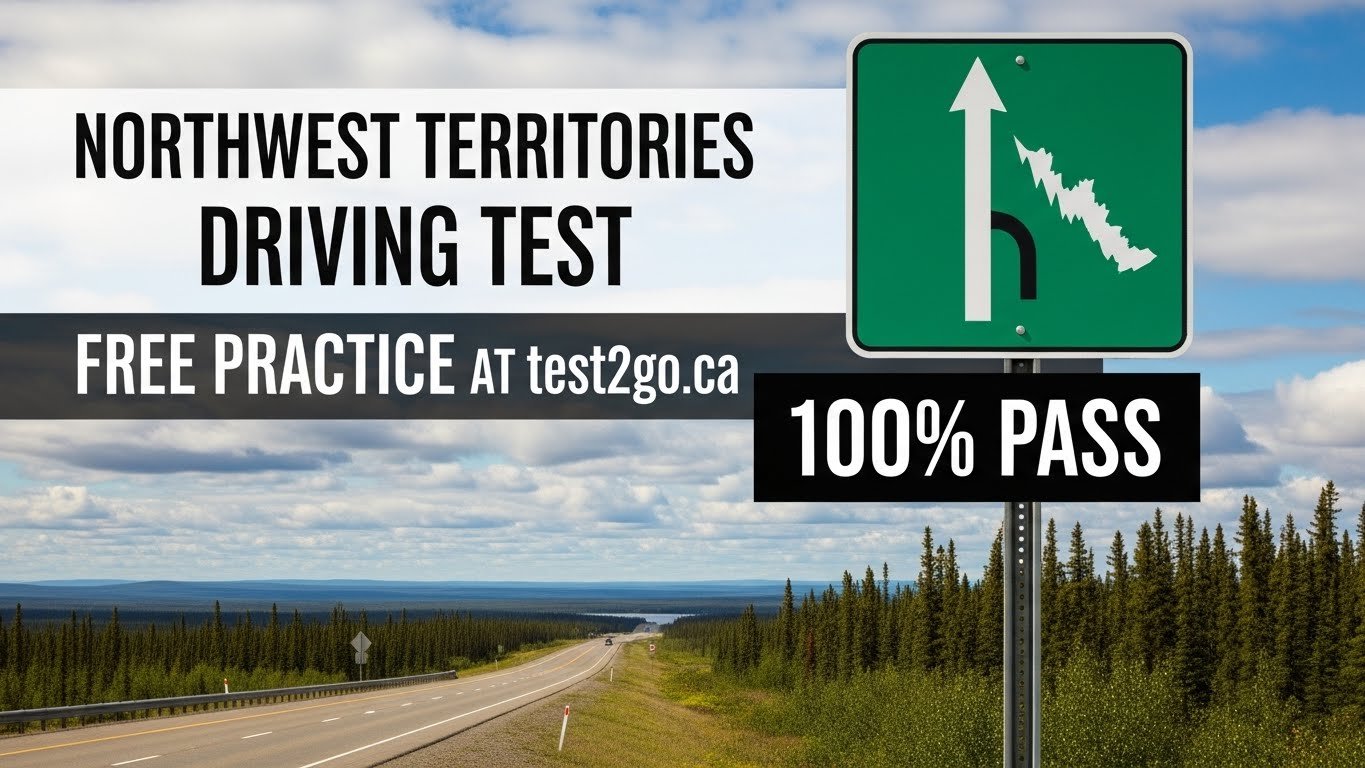
Northwest Territories Driving Signs – Practice & Meaning Guide (2026)
Understanding Northwest Territories driving signs is essential for passing the local knowledge test and staying safe on the road. Whether you are preparing for your NWT learner’s licence exam or just refreshing your driving knowledge, learning how to identify, interpret, and react to road signs is a key part of driving in northern Canada.
Why NWT Road Signs Matter
Driving in the Northwest Territories involves unique conditions such as long highways, wildlife crossings, extreme winter visibility, and rural communities. Road signs help drivers:
✔ Recognize hazards ✔ Follow road regulations ✔ Navigate remote areas safely ✔ Respond to changing road and weather conditions
Types of Northwest Territories Driving Signs
Road signs in the NWT follow standard Canadian sign categories:
1. Regulatory Signs
These signs tell drivers what they must or must not do. Common examples include:
– Speed limits – Stop signs – Yield signs – No passing areas – Turns and lane rules – Vehicle restrictions
Regulatory signs ensure safe and predictable driver behavior, especially on two-lane highways and community roads.
2. Warning Signs
Warning signs alert drivers to upcoming conditions or hazards. In NWT, warning signs may include:
Truck Licence written Practice Test Quiz 🚛 Ontario Truck Practice Test The Free Ontario Truck Practice Test is an essential study tool for anyone preparing…
Manitoba traffic signs and signals quiz Click here More Questions Manitoba Traffic Signs and Signals Practice Prepare for the Manitoba Class 5 knowledge test with…