Canada Citizenship Test 2026
1. Rights and Responsibilities of Citizenship
2. Who We Are
3. Canada’s History
4. Modern Canada
5. How Canadians Govern Themselves
6. Federal Elections
7. The Justice System
8. Canadian Symbols
9. Canada’s Economy
10. Canada’s Regions
Yes/No Questions
All 600+questions free Practice here
Canada Citizenship Test 2026
Introduction to the Canadian Citizenship Test
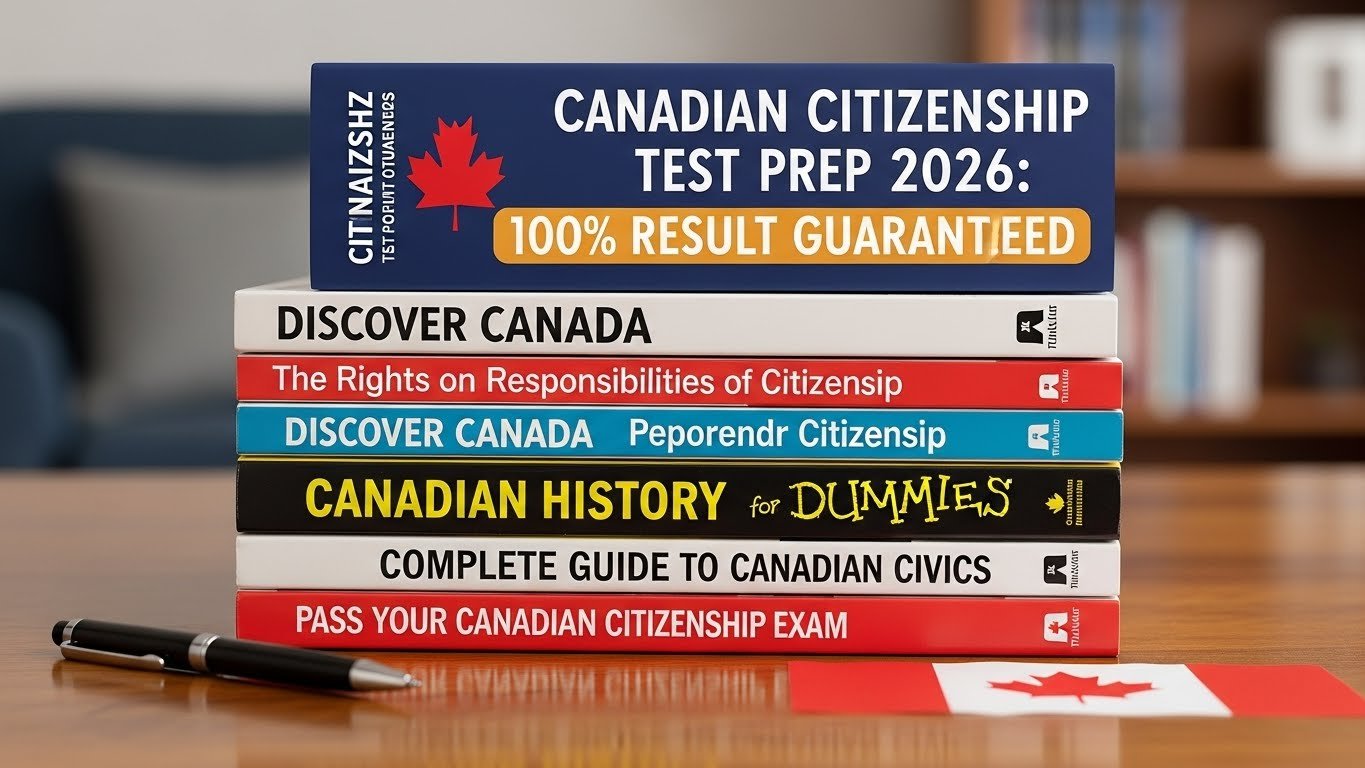
The Canadian Citizenship Test is an important step in the journey toward becoming a Canadian citizen. It is designed to assess an applicant’s knowledge of Canada, including its history, values, institutions, symbols, and the rights and responsibilities of citizenship. The test ensures that new citizens have a basic understanding of the country they are choosing to join and are prepared to participate fully in Canadian society. The content of the test is based entirely on the official study guide titled Discover Canada: The Rights and Responsibilities of Citizenship. Applicants are expected to study this guide carefully, as all test questions are drawn from it.
Becoming a Canadian citizen is not only a legal process but also a commitment to the shared values and democratic principles that define the country. The citizenship test plays a key role in confirming that applicants understand these principles and are ready to embrace the responsibilities that come with citizenship.
Canada Citizenship Test 2026
Who Must Take the Test
Most applicants between the ages of 18 and 54 are required to take the Canadian Citizenship Test. This age group must also demonstrate adequate knowledge of English or French, Canada’s two official languages. Applicants under 18 and those over 54 are generally not required to take the written test, although they may still need to attend an interview with a citizenship official. During the interview, officers may assess language ability and verify information provided in the application.
The test requirement applies to permanent residents who have met all eligibility criteria for citizenship, including physical presence in Canada for the required number of days, filing income taxes if necessary, and not being under a removal order or facing serious criminal charges.
Canada Citizenship Test 2026
Format and Structure of the Test
The Canadian Citizenship Test typically consists of 20 questions. These questions are presented in either multiple-choice or true/false format. Applicants are given 30 minutes to complete the test and must answer at least 15 questions correctly to achieve the passing score of 75 percent.
In recent years, the test has often been administered online, allowing applicants to complete it from home within a specified time window. In some cases, applicants may be invited to take the test in person. The process is monitored to ensure fairness and integrity.
If an applicant does not pass the test on the first attempt, they are usually given a second opportunity. If they fail again, they may be scheduled for an interview with a citizenship officer, who will ask questions orally to assess their knowledge.
Canada Citizenship Test 2026
Purpose of the Citizenship Test
The primary purpose of the citizenship test is to promote informed and engaged citizens. Canada is a democratic country built on principles such as freedom, equality, respect for diversity, and the rule of law. By studying for the test, applicants gain a deeper understanding of these values and the historical experiences that shaped the nation.
The test also reinforces the idea that citizenship involves both rights and responsibilities. While citizens enjoy protections under the law and the ability to participate in democratic processes, they are also expected to contribute positively to society. The test ensures that new citizens recognize and accept these obligations.
Canada Citizenship Test 2026
Topics Covered in the Test
All questions on the citizenship test are based on the content of Discover Canada. The main subject areas include history, government and political systems, rights and responsibilities, geography, and national symbols.
Canadian history is a major component of the test. Applicants are expected to understand the role of Indigenous peoples, including First Nations, Inuit, and Métis, who have lived in the land for thousands of years. The arrival of European explorers and settlers, the development of New France and British North America, and the events leading to Confederation in 1867 are key topics. Important historical milestones such as the expansion of the country westward, participation in major wars, and the patriation of the Constitution in 1982 are also covered.
Knowledge of Canada’s system of government is another essential area. Canada is a constitutional monarchy and a parliamentary democracy. The King is the Head of State, represented in Canada by the Governor General at the federal level and by Lieutenant Governors in the provinces. The Prime Minister is the Head of Government and leads the federal Cabinet. The test assesses understanding of the three branches of government: the executive, legislative, and judicial branches. It also covers the roles of Members of Parliament, Senators, and judges.
Applicants must also understand federalism, which divides powers between the federal government and the provinces and territories. For example, the federal government is responsible for national defense and foreign policy, while provinces manage areas such as education and health care. Municipal governments handle local matters like public transportation and community services.
Canada Citizenship Test 2026
Rights and Freedoms in Canada
A significant portion of the test focuses on the rights and freedoms enjoyed by Canadians. These rights are protected by the Canadian Charter of Rights and Freedoms, which forms part of the Constitution Act, 1982. The Charter guarantees fundamental freedoms such as freedom of expression, freedom of religion, and freedom of peaceful assembly. It also ensures democratic rights, mobility rights, legal rights, and equality rights.
Understanding the concept of the rule of law is crucial. In Canada, everyone is subject to the law, including government officials. No individual or group is above the law. This principle protects citizens from arbitrary treatment and ensures fairness in the justice system.
Alongside rights come responsibilities. Canadian citizens are expected to obey the law, take responsibility for themselves and their families, serve on a jury when called, vote in elections, and help others in the community. Voting is both a right and a responsibility, allowing citizens to choose their representatives and influence public policy.
Canada Citizenship Test 2026
Geography and Regional Knowledge
The citizenship test includes questions about Canada’s geography. Canada is the second-largest country in the world by land area and is divided into ten provinces and three territories. Applicants should know the names of these provinces and territories, their capital cities, and the national capital, Ottawa.
The country is bordered by three oceans: the Atlantic Ocean to the east, the Pacific Ocean to the west, and the Arctic Ocean to the north. Geographic regions such as the Atlantic provinces, Central Canada, the Prairie provinces, the West Coast, and the North each have distinct characteristics and economic activities.
Natural resources play an important role in Canada’s economy. These include forests, minerals, oil and gas, fisheries, and agricultural land. Understanding the diversity of Canada’s regions helps applicants appreciate the economic and cultural contributions of different parts of the country.
Canada Citizenship Test 2026
Canadian Symbols and Identity
The citizenship test also evaluates knowledge of national symbols. The Canadian flag, featuring the red and white maple leaf, is one of the most recognized symbols. The national anthem, “O Canada,” reflects pride and unity. Canada Day, celebrated on July 1, marks the anniversary of Confederation.
Other symbols include the Coat of Arms, the beaver, the Crown, and the national colors of red and white. Hockey and lacrosse are recognized as national sports. These symbols represent shared traditions and values that contribute to Canada’s national identity.
Canada Citizenship Test 2026
Preparing for the Test
Preparation is essential for success on the citizenship test. Applicants are strongly encouraged to read Discover Canada carefully, take notes, and review key facts. Many individuals create summaries of each chapter, focus on important dates, and practice answering sample questions.
Understanding concepts is more important than memorizing isolated facts. For example, rather than only remembering that Confederation occurred in 1867, applicants should understand why it happened and how it shaped the country. Similarly, knowing the structure of government helps applicants answer a variety of related questions.
Time management during the test is also important. Since applicants have 30 minutes to answer 20 questions, there is generally enough time to read each question carefully and review answers before submitting.
Canada Citizenship Test 2026
After the Test and Citizenship Ceremony
After passing the test and completing all requirements, applicants are invited to attend a citizenship ceremony. This is a meaningful event where they take the Oath of Citizenship. By taking the oath, new citizens pledge loyalty to Canada and to the King, and promise to faithfully observe the laws of the country and fulfill their duties as citizens.
The ceremony marks the final step in the citizenship process. New citizens receive a citizenship certificate and officially become Canadians. They gain the right to vote, run for political office, and apply for a Canadian passport.
Canada Citizenship Test 2026
Conclusion
The Canadian Citizenship Test is more than a simple examination. It represents a commitment to understanding and embracing the values, history, and democratic institutions of Canada. By studying Discover Canada, applicants gain knowledge that helps them integrate into society and participate actively in civic life.
The test ensures that new citizens are informed about their rights and aware of their responsibilities. It strengthens the foundation of Canadian democracy by promoting shared understanding and respect for the rule of law. Ultimately, the citizenship test is a meaningful milestone in the journey toward full membership in the Canadian community, symbolizing both achievement and responsibility.